Eugen Soloviov
Trading-systems engineer
Trading-systems engineer building bots since 2017: cross-exchange arbitrage (connected up to 30 venues), cointegration-based pairs arbitrage across spot and futures, scalping, news and sentiment-driven strategies, trend algorithms, and portfolio management and balancing algorithms. Also builds sub-millisecond order execution, big-data warehouses, backtesting engines, AI agents, and trading interfaces (incl. open-source profitmaker.cc). Stack: JS/TS, Python, Rust/Zig/Go, DevOps, backend, frontend, architecture.
Articles

Das Kelly-Kriterium für Strategien: Positionsgrößen und Kapitalallokation richtig bestimmen
Eine Strategie mit positivem Erwartungswert kann dein Konto trotzdem sprengen, wenn die Positionsgröße falsch gewählt ist. Wir leiten das Kelly-Kriterium her – von der Formel bis zum Strategie-Portfolio: warum volles Kelly gefährlich ist, wie fraktionales Kelly 75% des Wachstums bei halber Volatilität liefert, und ein interaktiver Rechner zeigt, wie der Kelly-Anteil Rendite und Risiko verschiebt.

Daily Stock Analysis: Ein KI-System, das eine Watchlist in ein tägliches Entscheidungs-Dashboard verwandelt
Eine ausführliche Analyse von daily_stock_analysis von ZhuLinsen — einem Open-Source-System, das Marktdaten für A-Aktien, Hongkong, die USA und mehr abruft, technische und Nachrichtenanalysen über ein LLM durchführt und jeden Handelstag ein strukturiertes 'Entscheidungs-Dashboard' an Ihren Messenger sendet. Architektur, Daten-Fallback, Agenten-Strategien, Grenzen.

Temporal Fusion Transformers for Multi-Horizon Portfolio Forecasting
How Google's Temporal Fusion Transformer brings interpretable multi-horizon forecasting to quantitative portfolio management, with attention-based variable selection, quantile outputs, and a worked pytorch-forecasting pipeline.

Konforme Prädiktion für risikobewusste Positionsgrößenbestimmung
Verteilungsfreie Prognoseintervalle mit garantierter Abdeckung. Wir nutzen Split-Conformal, Jackknife+ und adaptive konforme Inferenz, um Handelsrisiko zu kalibrieren und Positionen ohne parametrische Annahmen zu bemessen.

Bid-Ask Spread Modeling and Prediction with Machine Learning
Decomposing and predicting bid-ask spreads with ML — from Roll's implicit estimator to gradient boosting and neural networks — with the units, leakage, and benchmarking pitfalls that bite in production.

DeepLOB: Deep Learning für Limit-Orderbücher
Wie DeepLOB ein CNN, ein Inception-Modul und ein LSTM kombiniert, um Mid-Price-Bewegungen aus rohen Orderbuchdaten vorherzusagen — die Architektur, die echten FI-2010-Zahlen und eine funktionierende PyTorch-Reimplementierung.

Ein Blick in unseren Hausalgorithmus: HRP + Long/Short + CVaR mit Hull-White
Ein tiefer Einblick in Pipeline — den zusammengesetzten Allokationsalgorithmus, den wir auf Basis von HRP gebaut haben. Hierarchical Risk Parity als Fundament, ein Long/Short-Overlay gesteuert von Agentensignalen und Konfidenz, sowie eine abschließende Risikokorrektur über CVaR mit einer Hull-White-Volatilitätsanpassung. Die vollständige Mathematik aus unserer Spezifikation, plus die tatsächliche Rust-Implementierung.

12 Algorithmen zur Portfoliooptimierung im Vergleich: HRP, Black-Litterman, NCO und mehr
Ein Krypto-Korb, zwölf Allokationsalgorithmen, ein ehrlicher Vergleich. Wir haben einen Rust-Portfoliooptimierer als Open Source veröffentlicht, der HRP, HERC, MVO, Black-Litterman, NCO, Entropy Pooling und mehr hinter einer einzigen Schnittstelle vereint — hier erfahren Sie, wie jeder von ihnen denkt und warum es keinen einzelnen Gewinner gibt.
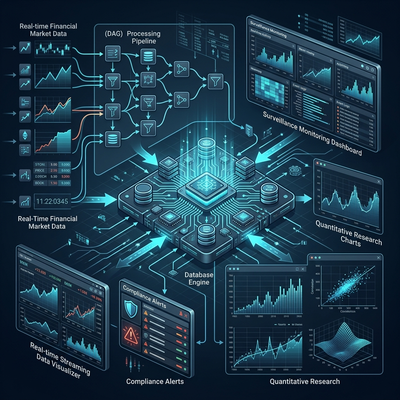
OneTick: Die Plattform, auf der Börsen Spoofer fangen und Hedgefonds Alpha jagen
Architektur von OneTick — eine Time-Series-Engine der Enterprise-Klasse für Tick-Daten. DAG-Queries via Event Processors, vereinheitlichte Echtzeit- und historische Daten, Marktüberwachung (MiFID II, MAR, SEC), TCA, Quant Research und Vergleich mit kdb+.
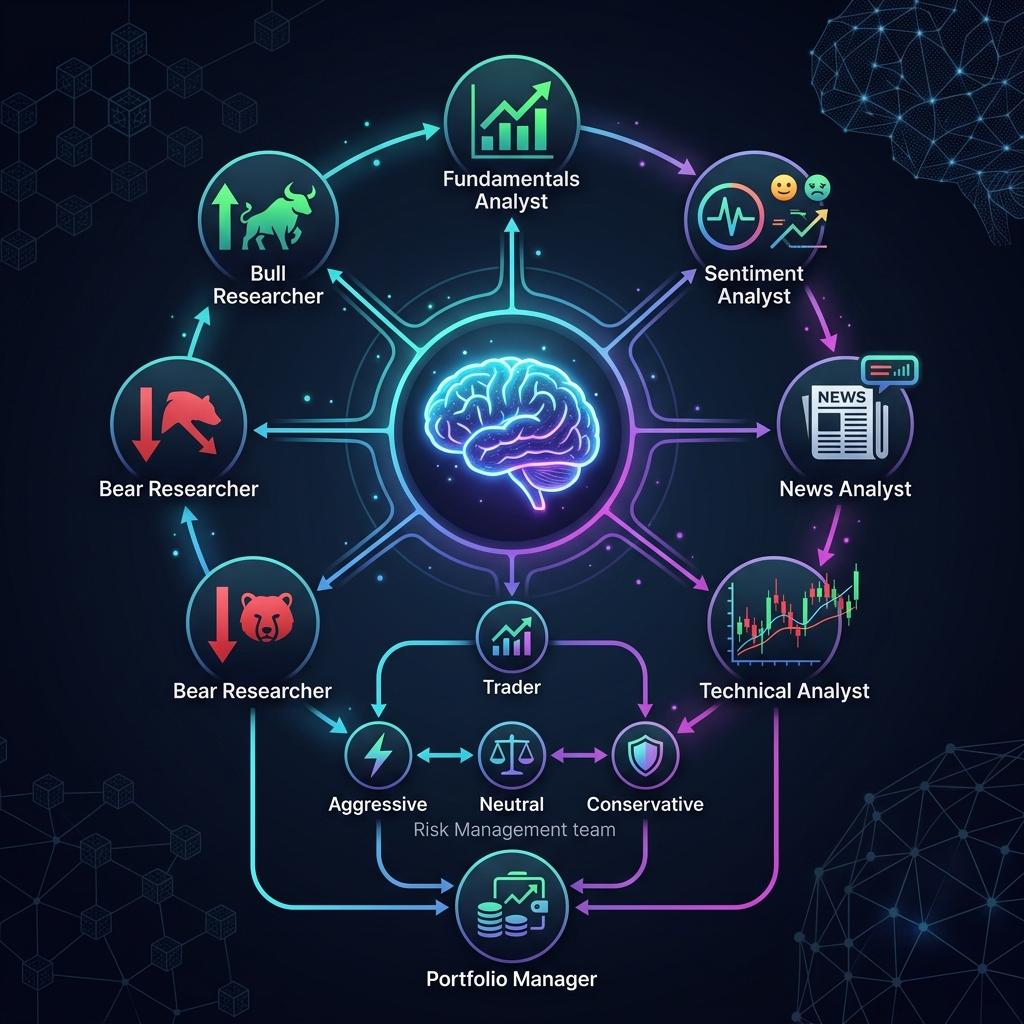
TradingAgents: Multi-Agent AI Framework That Models a Hedge Fund
Architecture deep dive into TradingAgents — an open-source LangGraph framework where LLM agents (analysts, researchers, trader, risk management, portfolio manager) engage in structured debates to make trading decisions.
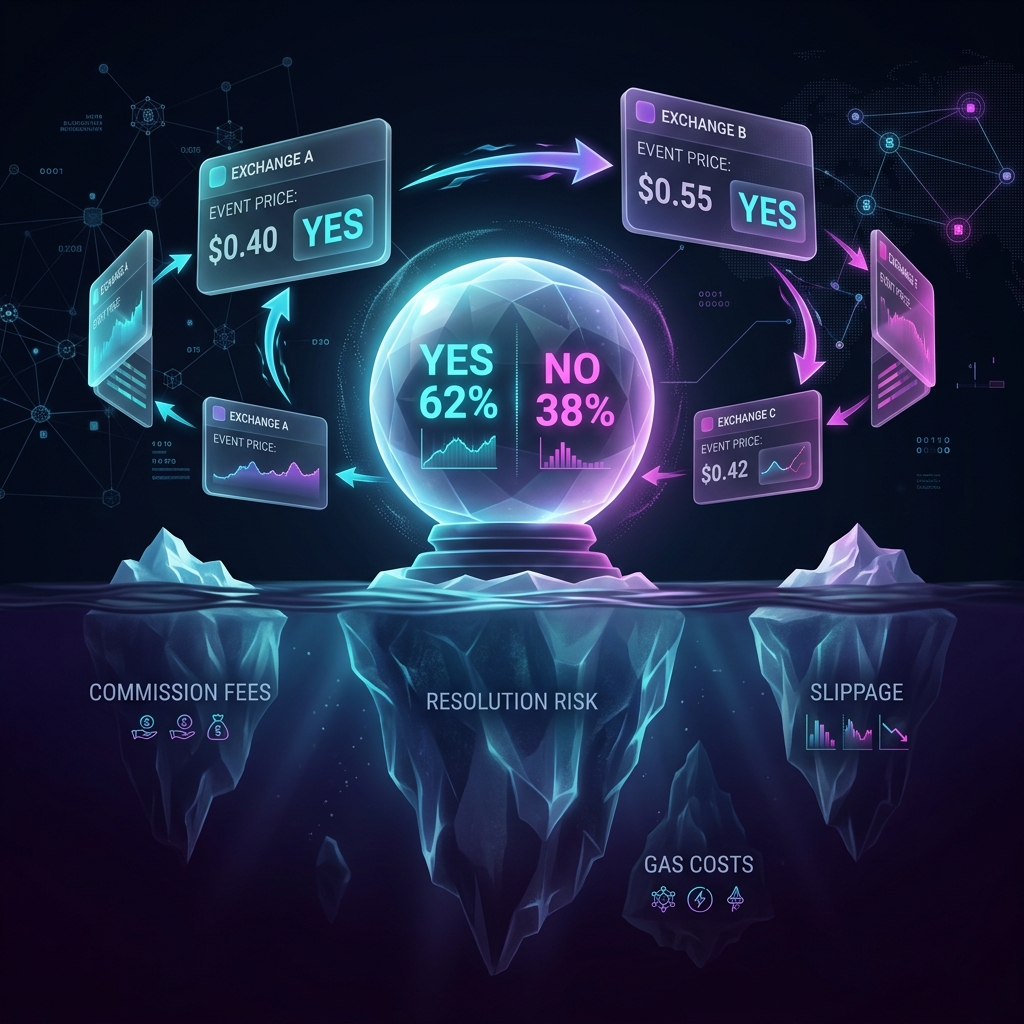
Arbitrage auf Prognosemärkten: Versteckte Kosten, Gebühren und die reale Rechnung
Eine Analyse der Arbitrage zwischen Polymarket, Limitless, Predict.fun, Opinion und Kalshi. Dynamische Gebühren, Cross-Chain-Bridges, Slippage, Resolution-Risiko — und warum ein Spread von 5% trotzdem Verlust bringen kann.

T-Bricks (Broadridge): How the Platform Powering Prop Firms Works
Architecture of T-Bricks — a modular HFT platform in C++ for market making, ETF arbitrage, and centralized risk management. 100+ clients, 150+ exchanges, nanosecond latencies.