Collections
Curated reading paths through the blog, ordered from basics to advanced.

Backtesting Without Fooling Yourself
A step-by-step path from what your backtest really optimizes to proving an edge survives overfitting, multiple testing, and live execution. Read top to bottom — each part builds on the last.
- 01Objective-Function Design: de metriek die je optimaliseert kiest stiekem je strategie
- 02Bewijzen dat multi-timeframe backtests geen look-ahead vertonen: verstoor de toekomst, bewijs dat het verleden de toekomst niet kan zien
- 03Look-Ahead Bias: hoe een fout van één bar een Sharpe van 15 fabriceert uit pure ruis
- 04Walk-Forward Optimization: The Only Honest Strategy Test
- +7 more

High-Performance Backtest Engines
How to build a backtest engine that runs hundreds of times faster without changing a single PnL number — data layout, caching, adaptive resolution, and architecture, from first speedups to production internals.
- 01De Backtest-snelheidsladder: 298x op een laptop-CPU, identieke PnL tot de laatste trade
- 02De framework-belasting: wanneer je backtestbibliotheek trager is dan een naïeve pandas-loop
- 03Geaggregeerde Parquet-cache: hoe je multi-timeframe backtests honderden keren sneller maakt
- 04De parameterruimte met twee assen: waarom het grootste deel van je sweep bijna gratis zou moeten zijn
- +7 more

Complex Arbitrage in Rust
A six-part build-up of multi-leg crypto arbitrage — from negative-cycle detection to the linear algebra, copulas, and machine learning behind it, ending in low-latency Rust execution.
- 01Graafalgoritmen voor arbitragedetectie: van Bellman-Ford tot RICH
- 02Futures-Spot Arbitrage: Van Cash-and-Carry naar DeFi-CeFi
- 03Matrices, tensoren en tropische algebra: lineaire algebra voor arbitragedetectie
- 04Vine Copulas voor Arbitrage: Modelleren van Hoogdimensionale Afhankelijkheden
- +2 more

Order Book & Market Microstructure
How the order book really works — accessing the data, reading queue position, rebuilding bars from order flow, and modeling it with deep learning and Hawkes processes.
- 01CCXT: hoe WebSocket-orderboekmethoden echt werken
- 02Ordertypes in Algorithmic Trading: van Limit met Chasing tot Virtuele Orders
- 03Queue Inside the Wall: Analyzing Order Position in Order Book Density
- 04Bartypes en Aggregatiemethoden voor Algoritmische Handel
- +8 more

Portfolio Construction & Risk
From Markowitz to production HRP + CVaR: how to allocate across crypto assets, model tail dependence with copulas, and size positions without blowing up.
- 01Markowitz-portefeuilletheorie voor Crypto: Van Nul tot Held
- 0212 Portfolio Optimization Algorithms, Compared: HRP, Black-Litterman, NCO and Beyond
- 03Inside Our House Algorithm: HRP + Long/Short + CVaR with Hull-White
- 04Copulamodellen voor gezamenlijke risicomodellering in cryptoportefeuilles
- +1 more

Risk & Position Sizing
Build position sizes from drawdown math, realistic trading costs, and uncertainty in backtest results before applying Kelly.
- 01Verlies-Winst Asymmetrie: De Wiskunde die je Deposito Vernietigt
- 02Slippage-curven, geen slippage-constanten: kostenmodellen die het contact met live trading overleven
- 03Monte Carlo Bootstrap: hoe je in 10 regels code betrouwbaarheidsintervallen voor een backtest krijgt
- 04Het Kelly-criterium voor strategieën: hoe posities dimensioneren en kapitaal alloceren
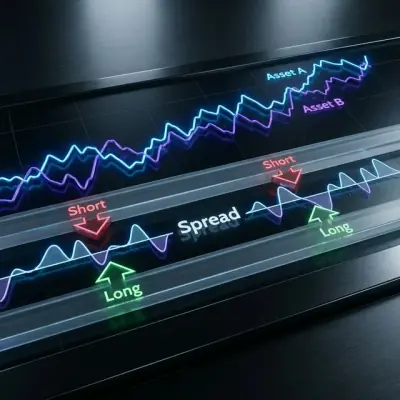
Statistical Arbitrage & Pairs Trading
Trade the spread between correlated assets — from the distance approach to cointegration and Kalman filters, then dynamically combining mean reversion with momentum.
- 01Distance Approach in Pairs Trading: Implementatie en Analyse met Rust
- 02Statistical Arbitrage and Pairs Trading in Crypto Markets: From Cointegration to the Kalman Filter
- 03Signal Correlation: How Many Pairs to Monitor
- 04Dynamisch combineren van Mean Reversion- en Momentum-strategieën in statistische arbitrage: wiskundige grondslagen en praktische implementatie
- +1 more

Deep Learning for Markets
Neural forecasting for crypto — transformers, diffusion models, and foundation models, and how conformal prediction keeps their uncertainty honest.
- 01Temporal Fusion Transformers for Multi-Horizon Portfolio Forecasting
- 02Diffusiemodellen vs cryptovaluta-anarchie: waarom DDPM Bitcoin-crashes beter voorspelt dan jouw astroloog
- 03Kronos: een foundationmodel dat candlestickcharts de taal van transformers leert spreken
- 04Conformal Prediction voor Risicobewuste Positiegrootte
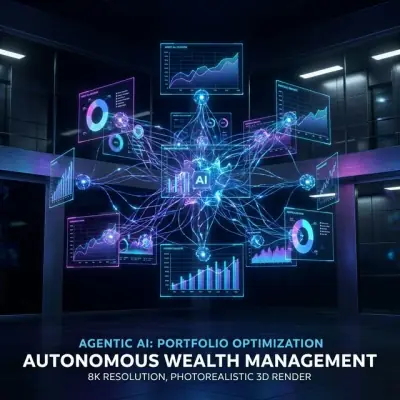
AI Agents for Trading
The agentic-AI stack for markets — multi-agent frameworks, open-source hedge funds, and LLMs that mine alpha from earnings calls.
- 01Revolutie in het beheer van beleggingsportefeuilles met Agentic AI
- 02TradingAgents: Multi-Agent AI Framework That Models a Hedge Fund
- 03AI4Finance Foundation: Het FinGPT-, FinRL- en FinRobot-ecosysteem voor algoritmisch handelen
- 04AI Hedge Fund: een multi-agent fonds waarin AI-analisten over trades stemmen
- +1 more

QuestDB for Algorithmic Trading
Stand up a time-series stack for trading on QuestDB — from architecture to the SQL that matters, to a production deployment.
- 01QuestDB for Algorithmic Trading: Architecture That Speaks the Language of Markets
- 02QuestDB for Algorithmic Trading: SQL Extensions That Change the Game
- 03QuestDB for Algorithmic Trading: From Order Books to Production Architecture

Low-Latency Trading Infrastructure
The plumbing under an HFT stack — how components talk (WebSocket, FIX, gRPC, Aeron), messaging on Aeron and Zig, and a C++ FIX/FAST scalper.
- 01Datacommunicatie in Algo Trading-systemen: Een Technologie-overzicht
- 02Aeron: een kijkje in het messagingsysteem dat de helft van de HFT-industrie aandrijft
- 03ZigBolt: Why We Built Our Own Aeron in Zig and Hit 20 Nanoseconds Per Message
- 04Developing a Simple C++ Scalper Using FAST/FIX: Step-by-Step Guide

Execution & Market Making
From TWAP/VWAP and Almgren-Chriss to TCA, slippage models, and the Avellaneda-Stoikov market maker — how to turn a signal into fills without paying the spread twice.
- 01TWAP versus VWAP versus POV: een executiebenchmark kiezen (en weten wanneer elk je voorliegt)
- 02Almgren-Chriss zonder de vaagheid: optimale executie die je in een middag kunt implementeren
- 03Binnen de slice: child-order tactieken tussen je scheduler en de exchange
- 04Smart Order Routing in Crypto: Eén Order, Twaalf Venues, Geen NBBO
- +7 more

Onchain & DeFi Quant
Quantitative DeFi from first principles — MEV and sandwich attacks, atomic arbitrage, liquidation cascades on lending protocols, and LP profitability on Uniswap v3.
- 01Anatomie van MEV: sandwiches, frontrunning en het duistere woud van de mempool
- 02De MEV-toeleveringsketen: PBS, MEV-Boost en de blokkenmarkt
- 03On-chain arbitrage: atomaire cycli, flash loans, en de veiling die je moet winnen
- 04Liquidaties on-chain: de mechanica van Aave en Compound, en de bot-business eromheen
- +5 more

Causality & Lead-Lag in Markets
Who moves whom — Granger causality, transfer entropy, PCMCI discovery, and the causal ML toolbox (double ML, causal forests, synthetic control) applied to crypto markets.
- 01Toda-Yamamoto vs Differenced Granger: Does the BTC Lead-Lag Survive?
- 02Transfer Entropy: Which Way Does Information Flow Between Crypto Assets?
- 03PCMCI: Causale ontdekking in multivariate crypto-tijdreeksen
- 04Causal Forests voor heterogene behandelings-effecten in trading
- +3 more

Volatility Modeling & Regimes
Forecast volatility with the GARCH family — asymmetry and leverage effects, dynamic correlations, vol targeting — then detect market regimes with HMMs and trade adaptively.
- 01GARCH(1,1): Cryptovolatiliteit voorspellen
- 02Asymmetrische en zwaarstaartige GARCH: EGARCH, GJR en Student-t
- 03DCC-GARCH: Dynamische correlaties voor pairs en portefeuillerisico
- 04Volatility Targeting en handelen met GARCH-voorspellingen
- +1 more

Modern ML for Trading
The full gradient-boosting-to-neural-operator toolkit — ensembles, AutoML, probabilistic forecasting, distillation and pruning for latency, plus physics-informed architectures like Neural ODEs and Fourier operators.
- 01XGBoost for Return Direction: Class Imbalance and Decision Thresholds
- 02Ensemble-methoden: zwakke leerlingen combineren voor robuuste alfa
- 03AutoML voor systematische handelspijplijnen
- 04Multi-Task Learning for Simultaneous Price, Volume, and Volatility Prediction
- +11 more