Collections
Curated reading paths through the blog, ordered from basics to advanced.

Backtesting Without Fooling Yourself
A step-by-step path from what your backtest really optimizes to proving an edge survives overfitting, multiple testing, and live execution. Read top to bottom — each part builds on the last.
- 01การออกแบบ Objective Function: ตัวชี้วัดที่คุณ Optimize แอบเลือกกลยุทธ์ให้คุณ
- 02การพิสูจน์ว่าไม่มี Look-Ahead ใน Multi-Timeframe Backtest: รบกวนอนาคต พิสูจน์ว่าอดีตมองไม่เห็นมัน
- 03Look-Ahead Bias: ความผิดพลาดเพียงหนึ่งแท่งเทียนสร้าง Sharpe 15 จาก Noise ล้วน ๆ ได้อย่างไร
- 04Walk-Forward Optimization: การทดสอบกลยุทธ์ที่ซื่อสัตย์เพียงวิธีเดียว
- +7 more

High-Performance Backtest Engines
How to build a backtest engine that runs hundreds of times faster without changing a single PnL number — data layout, caching, adaptive resolution, and architecture, from first speedups to production internals.
- 01บันไดความเร็วของ Backtest Engine: 298x บน CPU แล็ปท็อป, PnL เหมือนเดิมทุกประการจนถึง Trade สุดท้าย
- 02ภาษีของเฟรมเวิร์ก: เมื่อไลบรารี Backtest ของคุณช้ากว่าลูป Pandas แบบง่ายๆ
- 03Aggregated Parquet Cache: วิธีเร่งความเร็วแบ็คเทสต์หลาย Timeframe ได้หลายร้อยเท่า
- 04พื้นที่พารามิเตอร์สองแกน: ทำไมการสวีปส่วนใหญ่ของคุณจึงควรแทบจะฟรี
- +7 more
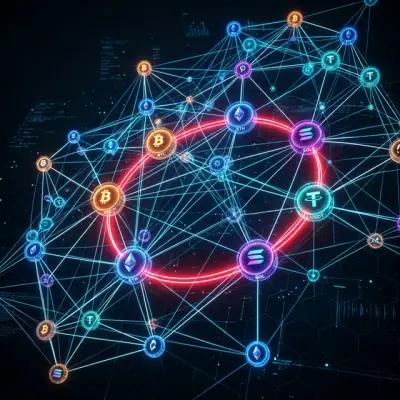
Complex Arbitrage in Rust
A six-part build-up of multi-leg crypto arbitrage — from negative-cycle detection to the linear algebra, copulas, and machine learning behind it, ending in low-latency Rust execution.
- 01อัลกอริทึมกราฟสำหรับการตรวจจับอาร์บิทราจ: จาก Bellman-Ford สู่ RICH
- 02อาร์บิทราจฟิวเจอร์ส-สปอต: จาก Cash-and-Carry ถึง DeFi-CeFi
- 03เมทริกซ์ เทนเซอร์ และพีชคณิตทรอปิคัล: พีชคณิตเชิงเส้นสำหรับการตรวจจับอาร์บิทราจ
- 04Vine Copulas สำหรับการอาร์บิทราจ: การสร้างแบบจำลองการพึ่งพากันในมิติสูง
- +2 more

Order Book & Market Microstructure
How the order book really works — accessing the data, reading queue position, rebuilding bars from order flow, and modeling it with deep learning and Hawkes processes.
- 01CCXT: วิธีการทำงานของ WebSocket Orderbook Methods อย่างแท้จริง
- 02ประเภทคำสั่งซื้อขายในการเทรดแบบอัลกอริทึม: จาก Limit แบบไล่ราคาไปจนถึง Virtual Orders
- 03คิวภายในกำแพง: การวิเคราะห์ตำแหน่งคำสั่งซื้อในความหนาแน่นของ Order Book
- 04ประเภทแท่งเทียนและวิธีการรวมข้อมูลสำหรับการซื้อขายแบบ Algorithmic
- +8 more

Portfolio Construction & Risk
From Markowitz to production HRP + CVaR: how to allocate across crypto assets, model tail dependence with copulas, and size positions without blowing up.
- 01ทฤษฎีพอร์ตโฟลิโอ Markowitz สำหรับคริปโต: จากศูนย์สู่ผู้เชี่ยวชาญ
- 0212 อัลกอริทึมการปรับพอร์ตโฟลิโอให้เหมาะที่สุด เปรียบเทียบกัน: HRP, Black-Litterman, NCO และอื่น ๆ
- 03เบื้องหลังอัลกอริทึมของเรา: HRP + Long/Short + CVaR กับ Hull-White
- 04โมเดล Copula สำหรับการสร้างแบบจำลองความเสี่ยงร่วมในพอร์ตโฟลิโอคริปโต
- +1 more

Risk & Position Sizing
Build position sizes from drawdown math, realistic trading costs, and uncertainty in backtest results before applying Kelly.
- 01ความไม่สมมาตรของการขาดทุนและกำไร: คณิตศาสตร์ที่ทำลายเงินฝากของคุณ
- 02เส้นโค้ง slippage ไม่ใช่ค่าคงที่ slippage: โมเดลต้นทุนที่รอดจากการเทรดจริง
- 03Monte Carlo Bootstrap: วิธีรับช่วงความเชื่อมั่นสำหรับ Backtest ใน 10 บรรทัดของโค้ด
- 04เกณฑ์เคลลี (Kelly criterion) สำหรับกลยุทธ์: เลือกขนาดโพซิชันและจัดสรรเงินทุนอย่างไร
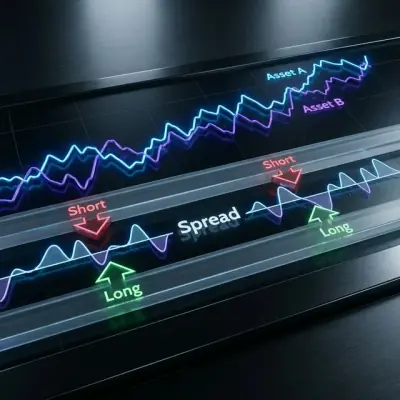
Statistical Arbitrage & Pairs Trading
Trade the spread between correlated assets — from the distance approach to cointegration and Kalman filters, then dynamically combining mean reversion with momentum.
- 01วิธีการ Distance Approach ในการเทรด Pairs Trading: การนำไปใช้และการวิเคราะห์ด้วย Rust
- 02Statistical Arbitrage และ Pairs Trading ในตลาด Crypto: จาก Cointegration สู่ Kalman Filter
- 03ความสัมพันธ์ของสัญญาณ: ต้องติดตามกี่คู่เหรียญ
- 04การรวมกลยุทธ์ Mean Reversion และ Momentum แบบไดนามิกในการอาร์บิทราจเชิงสถิติ: รากฐานทางคณิตศาสตร์และการนำไปใช้จริง
- +1 more

Deep Learning for Markets
Neural forecasting for crypto — transformers, diffusion models, and foundation models, and how conformal prediction keeps their uncertainty honest.
- 01Temporal Fusion Transformer สำหรับการพยากรณ์พอร์ตการลงทุนแบบหลายช่วงเวลา
- 02Diffusion Models vs ความอนาธิปไตยของคริปโต: ทำไม DDPM ถึงทำนายการดิ่งของ Bitcoin ได้ดีกว่านักโหราศาสตร์ของคุณ
- 03Kronos: โมเดล Foundation ที่สอนให้กราฟแท่งเทียนพูดภาษา Transformer
- 04Conformal Prediction สำหรับการกำหนดขนาดสถานะแบบตระหนักความเสี่ยง

AI Agents for Trading
The agentic-AI stack for markets — multi-agent frameworks, open-source hedge funds, and LLMs that mine alpha from earnings calls.
- 01การปฏิวัติการบริหารพอร์ตลงทุนด้วย Agentic AI
- 02TradingAgents: เฟรมเวิร์ก AI แบบหลายตัวแทนที่จำลองกองทุนเฮดจ์ฟันด์
- 03AI4Finance Foundation: ระบบนิเวศ FinGPT, FinRL และ FinRobot สำหรับการซื้อขายอัลกอริทึม
- 04AI Hedge Fund: กองทุนแบบ Multi-Agent ที่ AI นักวิเคราะห์โหวตตัดสินการเทรด
- +1 more

QuestDB for Algorithmic Trading
Stand up a time-series stack for trading on QuestDB — from architecture to the SQL that matters, to a production deployment.
- 01QuestDB สำหรับการซื้อขายเชิงอัลกอริทึม: สถาปัตยกรรมที่พูดภาษาตลาด
- 02QuestDB สำหรับการซื้อขายแบบอัลกอริทึม: ส่วนขยาย SQL ที่เปลี่ยนกฎของเกม
- 03QuestDB สำหรับการเทรดแบบอัลกอริทึม: จาก Order Book สู่สถาปัตยกรรมระดับ Production

Low-Latency Trading Infrastructure
The plumbing under an HFT stack — how components talk (WebSocket, FIX, gRPC, Aeron), messaging on Aeron and Zig, and a C++ FIX/FAST scalper.
- 01การสื่อสารข้อมูลในระบบ Algo Trading: ภาพรวมเทคโนโลยี
- 02Aeron: เบื้องหลังระบบส่งข้อความที่ขับเคลื่อนครึ่งหนึ่งของอุตสาหกรรม HFT
- 03ZigBolt: ทำไมเราถึงสร้าง Aeron ของตัวเองด้วย Zig และทำความเร็วได้ 20 นาโนวินาทีต่อข้อความ
- 04การพัฒนาสกัลเปอร์ C++ แบบง่ายโดยใช้ FAST/FIX: คู่มือทีละขั้นตอน

Execution & Market Making
From TWAP/VWAP and Almgren-Chriss to TCA, slippage models, and the Avellaneda-Stoikov market maker — how to turn a signal into fills without paying the spread twice.
- 01TWAP กับ VWAP กับ POV: การเลือก execution benchmark (และรู้ว่าเมื่อไหร่แต่ละตัวจะหลอกคุณ)
- 02Almgren-Chriss แบบไม่กั๊กความรู้: Optimal Execution ที่คุณนำไปใช้จริงได้ในบ่ายวันเดียว
- 03ภายในสไลซ์: กลยุทธ์ child order ระหว่างสเกดูลเลอร์กับตลาด
- 04Smart Order Routing ในคริปโต: คำสั่งเดียว สิบสอง Venue ไม่มี NBBO
- +7 more

Onchain & DeFi Quant
Quantitative DeFi from first principles — MEV and sandwich attacks, atomic arbitrage, liquidation cascades on lending protocols, and LP profitability on Uniswap v3.
- 01กายวิภาคของ MEV: sandwich, frontrunning และป่ามืดแห่ง mempool
- 02The MEV supply chain: PBS, MEV-Boost, and who actually captures the value
- 03การเก็งกำไรบนเชน: วงจรอะตอม, แฟลชโลน, และการประมูลที่คุณต้องชนะ
- 04การชำระบัญชีแบบ on-chain: กลไกของ Aave และ Compound และธุรกิจบอทที่อยู่รอบตัวมัน
- +5 more

Causality & Lead-Lag in Markets
Who moves whom — Granger causality, transfer entropy, PCMCI discovery, and the causal ML toolbox (double ML, causal forests, synthetic control) applied to crypto markets.
- 01Toda-Yamamoto vs Differenced Granger: Does the BTC Lead-Lag Survive?
- 02Transfer Entropy: Which Way Does Information Flow Between Crypto Assets?
- 03PCMCI: Causal Discovery in Multivariate Crypto Time Series
- 04ป่าสาเหตุสำหรับผลกระทบการรักษาที่แตกต่างกันในการเทรด
- +3 more

Volatility Modeling & Regimes
Forecast volatility with the GARCH family — asymmetry and leverage effects, dynamic correlations, vol targeting — then detect market regimes with HMMs and trade adaptively.
- 01GARCH(1,1): การพยากรณ์ความผันผวนของคริปโต
- 02GARCH แบบไม่สมมาตรและหางหนา: EGARCH, GJR และ Student-t
- 03DCC-GARCH: สหสัมพันธ์แบบพลวัตสำหรับการเทรดคู่และความเสี่ยงพอร์ต
- 04การกำหนดเป้าหมายความผันผวนและการเทรดด้วยการพยากรณ์ GARCH
- +1 more

Modern ML for Trading
The full gradient-boosting-to-neural-operator toolkit — ensembles, AutoML, probabilistic forecasting, distillation and pruning for latency, plus physics-informed architectures like Neural ODEs and Fourier operators.
- 01XGBoost for Return Direction: Class Imbalance and Decision Thresholds
- 02วิธีการรวมกลุ่ม: ผสมผสานผู้เรียนที่อ่อนแอเพื่ออัลฟ่าที่แข็งแกร่ง
- 03AutoML สำหรับไปป์ไลน์การซื้อขายเชิงระบบ
- 04Multi-Task Learning for Simultaneous Price, Volume, and Volatility Prediction
- +11 more