Collections
Curated reading paths through the blog, ordered from basics to advanced.

Backtesting Without Fooling Yourself
A step-by-step path from what your backtest really optimizes to proving an edge survives overfitting, multiple testing, and live execution. Read top to bottom — each part builds on the last.
- 01目標函數設計:你最佳化的那個指標,正悄悄替你選好了策略
- 02證明多時間框架回測中沒有look-ahead:擾動未來,證明過去看不到它
- 03前視偏差:一根 K 線的錯誤如何從純噪聲中憑空製造出 15 的夏普比率
- 04Walk-Forward 最佳化:唯一誠實的策略測試方法
- +8 more

High-Performance Backtest Engines
How to build a backtest engine that runs hundreds of times faster without changing a single PnL number — data layout, caching, adaptive resolution, and architecture, from first speedups to production internals.
- 01Polars vs Pandas 演算法交易實戰基準測試
- 02VectorBT:Python 中最快的回測框架
- 03回測引擎速度階梯:筆記本 CPU 上 298 倍提速,PnL 精確到最後一筆交易
- 04框架稅:當你的回測庫比手寫的 pandas 迴圈還慢
- +9 more

Complex Arbitrage in Rust
A six-part build-up of multi-leg crypto arbitrage — from negative-cycle detection to the linear algebra, copulas, and machine learning behind it, ending in low-latency Rust execution.
- 01套利檢測的圖演算法:從 Bellman-Ford 到 RICH
- 02期貨-現貨套利:從期現套利到 DeFi-CeFi
- 03矩陣、張量與熱帶代數:用於套利檢測的線性代數
- 04套利中的 Vine Copulas:高維依賴關係建模
- +2 more

Order Book & Market Microstructure
How the order book really works — accessing the data, reading queue position, rebuilding bars from order flow, and modeling it with deep learning and Hawkes processes.
- 01CCXT:WebSocket 訂單簿方法實際工作原理
- 02演算法交易中的訂單型別:從追價限價單到虛擬訂單
- 03牆內排隊:訂單簿密集區的掛單位置分析
- 04演算法交易的K線型別與聚合方法
- +8 more

Portfolio Construction & Risk
From Markowitz to production HRP + CVaR: how to allocate across crypto assets, model tail dependence with copulas, and size positions without blowing up.
- 01馬科維茨投資組合理論之加密貨幣篇:從零到英雄
- 0212種投資組合最佳化演算法比較:HRP、Black-Litterman、NCO及其他
- 03我們的內部演算法揭秘:HRP + 多空 + 基於Hull-White的CVaR
- 04Copula模型:加密投資組合聯合風險建模
- +3 more

Risk & Position Sizing
Build position sizes from drawdown math, realistic trading costs, and uncertainty in backtest results before applying Kelly.
- 01虧損與盈利的不對稱性:正在摧毀你賬戶的數學原理
- 02滑點曲線,而非滑點常數:經得起實盤檢驗的成本模型
- 03資金費率扼殺你的槓桿:為什麼 PnL×50x 是虛構的
- 04蒙特卡洛自助法:如何用10行程式碼獲取回測的置信區間
- +1 more
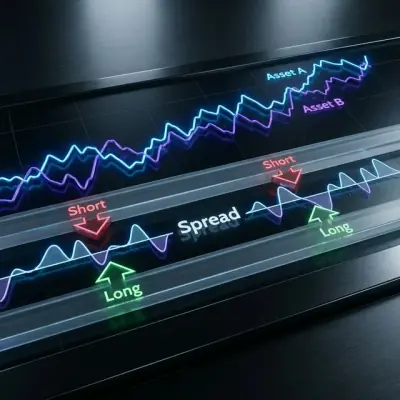
Statistical Arbitrage & Pairs Trading
Trade the spread between correlated assets — from the distance approach to cointegration and Kalman filters, then dynamically combining mean reversion with momentum.
- 01配對交易中的距離法:Rust實現與分析
- 02加密貨幣市場的統計套利與配對交易:從協整到卡爾曼濾波
- 03訊號相關性:需要監控多少個交易對
- 04統計套利中均值迴歸與動量策略的動態結合:數學基礎與實踐實現
- +1 more

Deep Learning for Markets
Neural forecasting for crypto — transformers, diffusion models, and foundation models, and how conformal prediction keeps their uncertainty honest.
- 01用於多時間跨度組合預測的時序融合 Transformer
- 02擴散模型對抗加密貨幣無政府狀態:為什麼DDPM比你的占星師更能預測比特幣崩盤
- 03Kronos:讓K線圖說Transformer語言的基礎模型
- 04用於風險感知倉位管理的保形預測

AI Agents for Trading
The agentic-AI stack for markets — multi-agent frameworks, open-source hedge funds, and LLMs that mine alpha from earnings calls.
- 01基於代理型AI的投資組合管理革命
- 02TradingAgents:模擬對沖基金的多智慧體AI交易框架
- 03AI4Finance Foundation:FinGPT、FinRL和FinRobot量化交易生態系統
- 04AI Hedge Fund:AI分析師投票決定交易的多智慧體基金
- +4 more

QuestDB for Algorithmic Trading
Stand up a time-series stack for trading on QuestDB — from architecture to the SQL that matters, to a production deployment.
- 01QuestDB 演算法交易實戰:讀懂市場語言的架構設計
- 02QuestDB 演算法交易實戰:改變遊戲規則的 SQL 擴充
- 03QuestDB 演算法交易實戰:從訂單簿到生產架構

Low-Latency Trading Infrastructure
The plumbing under an HFT stack — how components talk (WebSocket, FIX, gRPC, Aeron), messaging on Aeron and Zig, and a C++ FIX/FAST scalper.
- 01演算法交易系統中的資料通訊:技術綜述
- 02Aeron:驅動半個HFT行業的訊息傳遞系統揭秘
- 03ZigBolt:為什麼我們用 Zig 從零打造了自己的 Aeron,實現了每條訊息 20 納秒延遲
- 04使用 FAST/FIX 開發簡單 C++ 剝頭皮交易機器人:分步指南

Execution & Market Making
From TWAP/VWAP and Almgren-Chriss to TCA, slippage models, and the Avellaneda-Stoikov market maker — how to turn a signal into fills without paying the spread twice.
- 01TWAP、VWAP與POV對比:如何選擇執行基準(以及何時它們會對你撒謊)
- 02去掉玄乎其辭的 Almgren-Chriss:一個下午就能實現的最優執行模型
- 03切片內部:排程器與交易所之間的子訂單戰術
- 04加密市場的智慧訂單路由:一筆訂單,十二個場所,沒有 NBBO
- +7 more

Onchain & DeFi Quant
Quantitative DeFi from first principles — MEV and sandwich attacks, atomic arbitrage, liquidation cascades on lending protocols, and LP profitability on Uniswap v3.
- 01MEV 剖析:三明治攻擊、搶先交易與記憶體池的黑暗森林
- 02MEV 供應鏈:PBS、MEV-Boost 與區塊市場
- 03鏈上套利:原子循環、閃電貸與你必須贏得的拍賣
- 04鏈上清算:Aave 與 Compound 的機制,以及圍繞它們的機器人生意
- +5 more

Causality & Lead-Lag in Markets
Who moves whom — Granger causality, transfer entropy, PCMCI discovery, and the causal ML toolbox (double ML, causal forests, synthetic control) applied to crypto markets.
- 01Toda-Yamamoto vs Differenced Granger: Does the BTC Lead-Lag Survive?
- 02Transfer Entropy: Which Way Does Information Flow Between Crypto Assets?
- 03PCMCI: Causal Discovery in Multivariate Crypto Time Series
- 04交易中異質治療效果的因果森林
- +3 more

Volatility Modeling & Regimes
Forecast volatility with the GARCH family — asymmetry and leverage effects, dynamic correlations, vol targeting — then detect market regimes with HMMs and trade adaptively.
- 01GARCH(1,1):預測加密貨幣波動率
- 02非對稱與厚尾GARCH:EGARCH、GJR與Student-t
- 03DCC-GARCH:配對交易與組合風險的動態相關性
- 04波動率目標化與基於GARCH預測的交易
- +1 more

Modern ML for Trading
The full gradient-boosting-to-neural-operator toolkit — ensembles, AutoML, probabilistic forecasting, distillation and pruning for latency, plus physics-informed architectures like Neural ODEs and Fourier operators.
- 01用於報酬方向的 XGBoost:類別不平衡與決策閾值
- 02整合方法:結合弱學習者以獲得穩健的 Alpha
- 03用於系統化交易流程的 AutoML
- 04Multi-Task Learning for Simultaneous Price, Volume, and Volatility Prediction
- +11 more