Collections
Curated reading paths through the blog, ordered from basics to advanced.

Backtesting Without Fooling Yourself
A step-by-step path from what your backtest really optimizes to proving an edge survives overfitting, multiple testing, and live execution. Read top to bottom — each part builds on the last.
- 01Design der Zielfunktion: Die Metrik, die Sie optimieren, wählt heimlich Ihre Strategie
- 02Der Beweis gegen Look-Ahead in Multi-Timeframe-Backtests: Die Zukunft stören, um zu beweisen, dass die Vergangenheit sie nicht sehen kann
- 03Look-Ahead Bias: Wie ein Ein-Balken-Fehler aus reinem Rauschen eine Sharpe Ratio von 15 fabriziert
- 04Walk-Forward Optimization: The Only Honest Strategy Test
- +7 more
High-Performance Backtest Engines
How to build a backtest engine that runs hundreds of times faster without changing a single PnL number — data layout, caching, adaptive resolution, and architecture, from first speedups to production internals.
- 01Die Backtest-Geschwindigkeitsleiter: 298x auf einer Laptop-CPU, identischer PnL bis zum letzten Trade
- 02Die Framework-Steuer: Wenn deine Backtest-Bibliothek langsamer ist als eine naive Pandas-Schleife
- 03Aggregierter Parquet-Cache: Wie man Multi-Timeframe-Backtests um das Hundertfache beschleunigt
- 04Der zweiachsige Parameterraum: Warum der Großteil Ihres Sweeps nahezu kostenlos sein sollte
- +7 more
Complex Arbitrage in Rust
A six-part build-up of multi-leg crypto arbitrage — from negative-cycle detection to the linear algebra, copulas, and machine learning behind it, ending in low-latency Rust execution.
- 01Graphalgorithmen zur Arbitrage-Erkennung: Von Bellman-Ford bis RICH
- 02Futures-Spot-Arbitrage: Vom Cash-and-Carry zum DeFi-CeFi
- 03Matrizen, Tensoren und tropische Algebra: Lineare Algebra zur Arbitrage-Erkennung
- 04Vine Copulas für Arbitrage: Modellierung hochdimensionaler Abhängigkeiten
- +2 more
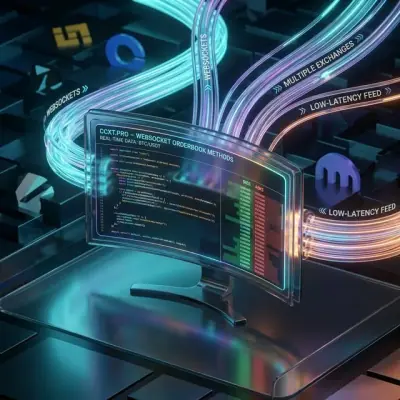
Order Book & Market Microstructure
How the order book really works — accessing the data, reading queue position, rebuilding bars from order flow, and modeling it with deep learning and Hawkes processes.
- 01CCXT: Wie WebSocket-Orderbook-Methoden wirklich funktionieren
- 02Ordertypen im algorithmischen Handel: Von der nachziehenden Limit-Order bis zu virtuellen Orders
- 03Queue Inside the Wall: Analyzing Order Position in Order Book Density
- 04Bar-Typen und Aggregationsmethoden für algorithmischen Handel
- +8 more

Portfolio Construction & Risk
From Markowitz to production HRP + CVaR: how to allocate across crypto assets, model tail dependence with copulas, and size positions without blowing up.
- 01Markowitz-Portfoliotheorie für Krypto: Vom Anfänger zum Experten
- 0212 Algorithmen zur Portfoliooptimierung im Vergleich: HRP, Black-Litterman, NCO und mehr
- 03Ein Blick in unseren Hausalgorithmus: HRP + Long/Short + CVaR mit Hull-White
- 04Copula-Modelle für die gemeinsame Risikomodellierung in Krypto-Portfolios
- +1 more

Risk & Position Sizing
Build position sizes from drawdown math, realistic trading costs, and uncertainty in backtest results before applying Kelly.
- 01Verlust-Gewinn-Asymmetrie: Die Mathematik, die dein Depot zerstört
- 02Slippage-Kurven statt Slippage-Konstanten: Kostenmodelle, die den Kontakt mit dem Live-Handel überstehen
- 03Monte-Carlo-Bootstrap: Wie man in 10 Codezeilen Konfidenzintervalle für einen Backtest erhält
- 04Das Kelly-Kriterium für Strategien: Positionsgrößen und Kapitalallokation richtig bestimmen
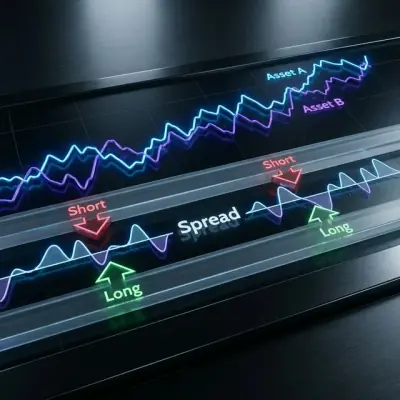
Statistical Arbitrage & Pairs Trading
Trade the spread between correlated assets — from the distance approach to cointegration and Kalman filters, then dynamically combining mean reversion with momentum.
- 01Distance Approach im Pairs Trading: Implementierung und Analyse mit Rust
- 02Statistical Arbitrage and Pairs Trading in Crypto Markets: From Cointegration to the Kalman Filter
- 03Signal Correlation: How Many Pairs to Monitor
- 04Dynamische Kombination von Mean-Reversion- und Momentum-Strategien im Statistical Arbitrage: Mathematische Grundlagen und praktische Umsetzung
- +1 more

Deep Learning for Markets
Neural forecasting for crypto — transformers, diffusion models, and foundation models, and how conformal prediction keeps their uncertainty honest.
- 01Temporal Fusion Transformers for Multi-Horizon Portfolio Forecasting
- 02Diffusionsmodelle vs. Kryptowährungs-Anarchie: Warum DDPM Bitcoin-Crashs besser vorhersagen kann als Ihr Astrologe
- 03Kronos: Ein Foundation-Modell, das Candlestick-Charts das Sprechen in Transformer-Sprache beibringt
- 04Konforme Prädiktion für risikobewusste Positionsgrößenbestimmung
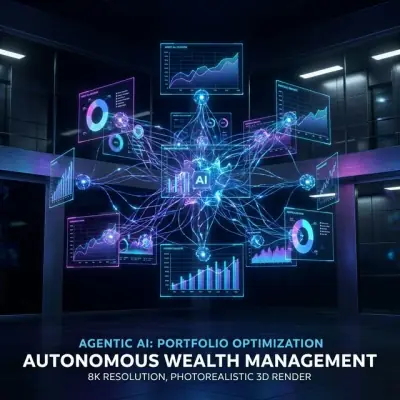
AI Agents for Trading
The agentic-AI stack for markets — multi-agent frameworks, open-source hedge funds, and LLMs that mine alpha from earnings calls.
- 01Revolution im Management von Anlageportfolios mit agentischer KI
- 02TradingAgents: Multi-Agent AI Framework That Models a Hedge Fund
- 03AI4Finance Foundation: Das FinGPT-, FinRL- und FinRobot-Ökosystem für den algorithmischen Handel
- 04AI Hedge Fund: Ein Multi-Agenten-Fonds, in dem KI-Analysten über Trades abstimmen
- +1 more

QuestDB for Algorithmic Trading
Stand up a time-series stack for trading on QuestDB — from architecture to the SQL that matters, to a production deployment.
- 01QuestDB for Algorithmic Trading: Architecture That Speaks the Language of Markets
- 02QuestDB for Algorithmic Trading: SQL Extensions That Change the Game
- 03QuestDB for Algorithmic Trading: From Order Books to Production Architecture

Low-Latency Trading Infrastructure
The plumbing under an HFT stack — how components talk (WebSocket, FIX, gRPC, Aeron), messaging on Aeron and Zig, and a C++ FIX/FAST scalper.
- 01Datenkommunikation in Algo-Trading-Systemen: Ein Technologieüberblick
- 02Aeron: Ein Blick in das Messaging-System, das die Hälfte der HFT-Branche antreibt
- 03ZigBolt: Why We Built Our Own Aeron in Zig and Hit 20 Nanoseconds Per Message
- 04Developing a Simple C++ Scalper Using FAST/FIX: Step-by-Step Guide
Execution & Market Making
From TWAP/VWAP and Almgren-Chriss to TCA, slippage models, and the Avellaneda-Stoikov market maker — how to turn a signal into fills without paying the spread twice.
- 01TWAP vs. VWAP vs. POV: die richtige Execution-Benchmark wählen (und wissen, wann jede von ihnen lügt)
- 02Almgren-Chriss ohne Handwedeln: Optimale Ausführung, die Sie an einem Nachmittag implementieren können
- 03Im Innern des Slice: Child-Order-Taktiken zwischen Scheduler und Börse
- 04Smart Order Routing in Crypto: Eine Order, zwölf Handelsplätze, kein NBBO
- +7 more

Onchain & DeFi Quant
Quantitative DeFi from first principles — MEV and sandwich attacks, atomic arbitrage, liquidation cascades on lending protocols, and LP profitability on Uniswap v3.
- 01Anatomie von MEV: Sandwiches, Frontrunning und der dunkle Wald des Mempools
- 02Die MEV-Lieferkette: PBS, MEV-Boost und wer den Wert tatsächlich abschöpft
- 03On-chain Arbitrage: Atomare Zyklen, Flash Loans und die Auktion, die man gewinnen muss
- 04Liquidationen on-chain: Die Mechanik von Aave und Compound und das Bot-Geschäft dahinter
- +5 more

Causality & Lead-Lag in Markets
Who moves whom — Granger causality, transfer entropy, PCMCI discovery, and the causal ML toolbox (double ML, causal forests, synthetic control) applied to crypto markets.
- 01Toda-Yamamoto vs Differenced Granger: Does the BTC Lead-Lag Survive?
- 02Transfer Entropy: Which Way Does Information Flow Between Crypto Assets?
- 03PCMCI: Causal Discovery in Multivariate Crypto Time Series
- 04Causal Forests für heterogene Behandlungseffekte im Trading
- +3 more

Volatility Modeling & Regimes
Forecast volatility with the GARCH family — asymmetry and leverage effects, dynamic correlations, vol targeting — then detect market regimes with HMMs and trade adaptively.
- 01GARCH(1,1): Prognose der Krypto-Volatilität
- 02Asymmetrisches und heavy-tailed GARCH: EGARCH, GJR und Student-t
- 03DCC-GARCH: Dynamische Korrelationen für Paare und Portfoliorisiko
- 04Volatility Targeting und Trading mit GARCH-Prognosen
- +1 more

Modern ML for Trading
The full gradient-boosting-to-neural-operator toolkit — ensembles, AutoML, probabilistic forecasting, distillation and pruning for latency, plus physics-informed architectures like Neural ODEs and Fourier operators.
- 01XGBoost for Return Direction: Class Imbalance and Decision Thresholds
- 02Ensemble-Methoden: Kombination schwacher Lernender für robustes Alpha
- 03AutoML für systematische Handelspipelines
- 04Multi-Task Learning for Simultaneous Price, Volume, and Volatility Prediction
- +11 more