Eugen Soloviov
Trading-systems engineer
Trading-systems engineer building bots since 2017: cross-exchange arbitrage (connected up to 30 venues), cointegration-based pairs arbitrage across spot and futures, scalping, news and sentiment-driven strategies, trend algorithms, and portfolio management and balancing algorithms. Also builds sub-millisecond order execution, big-data warehouses, backtesting engines, AI agents, and trading interfaces (incl. open-source profitmaker.cc). Stack: JS/TS, Python, Rust/Zig/Go, DevOps, backend, frontend, architecture.
Articles
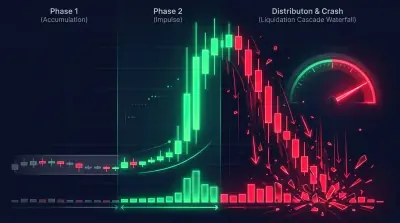
How to Catch Drops After Shitcoin Pumps: A Systematic Approach
A systematic breakdown of shorting strategies after shitcoin pumps. Funding rate, OI, volume analysis, candlestick patterns, liquidation cascades. With a practical algorithm.
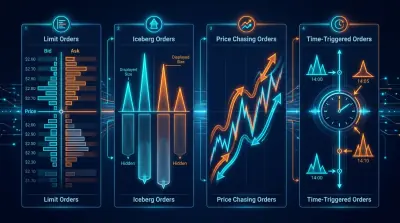
Order Types in Algorithmic Trading: From Limit with Chasing to Virtual Orders
A comprehensive guide to order types in algorithmic trading: standard exchange orders, chasing limit, time-based, virtual/synthetic orders. With code examples and real-world use cases.

Bar Types and Aggregation Methods for Algorithmic Trading
Two-axis classification of candle construction: 17 base bar types (time, tick, volume, dollar, Renko, range, volatility, Heikin-Ashi, Kagi, Line Break, P&F, TIB, VIB, run, CUSUM, entropy, delta) × 3 aggregation methods (calendar, rolling, adaptive) = 51 combinations. With implementation code and practical recommendations.

Hidden Markov Models in Trading: How to Adapt Your Strategy to Market Regimes
How to identify the current market regime (bull, bear, sideways) using Hidden Markov Models and automatically switch trading strategies. With Python code and backtests.

Queue Inside the Wall: Analyzing Order Position in Order Book Density
How understanding your place in the queue at a price level transforms scalping from guesswork into an engineering problem

LLM Alpha Mining: How to Extract Trading Signals from Earnings Calls and Financial Documents
How to use large language models to extract trading signals from investor calls, reports, and news. Chain-of-thought prompting, structured extraction, signal backtesting.
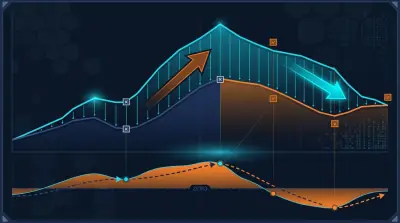
Statistical Arbitrage and Pairs Trading in Crypto Markets: From Cointegration to the Kalman Filter
A complete guide to statistical arbitrage for crypto markets. Cointegration, Kalman filter, basis strategies, cross-exchange arbitrage. With backtests and Python code.

Digital Fingerprint of a Trader: How to Identify a Market Maker by Their Order Book Behavior
Every algorithm leaves a unique fingerprint. Learn to read it — and you will know who is on the other side of your trade.

PnL by Active Time: The Metric That Changes Strategy Rankings
Why raw annual PnL is a poor metric for comparing strategies with different trading time. How to calculate effective return, why you need fill_efficiency, and why a strategy with 27% PnL can outperform one with 300%.
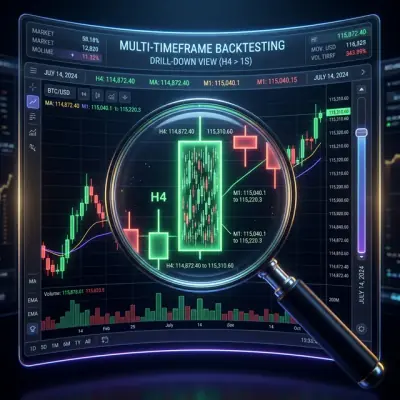
Adaptive Drill-Down: Backtest with Variable Granularity from Minutes to Raw Trades
How adaptive data granularity speeds up backtests and saves storage: drill-down from 1m to 1s, 100ms, and raw trades only where price moved significantly or volume spiked, not across the entire historical series.

Aggregated Parquet Cache: How to Speed Up Multi-Timeframe Backtests by Hundreds of Times
How to precompute timeframes and indicators from minute candles, save them to parquet, and use them for mass strategy testing without redundant recalculations.
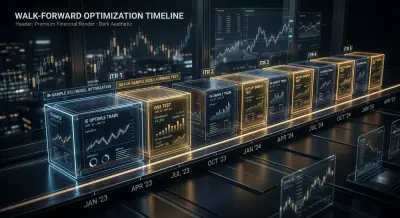
Walk-Forward Optimization: The Only Honest Strategy Test
Why a single train/test split does not protect against overfitting, how walk-forward optimization systematically verifies parameter robustness, and why a strategy with +3342% PnL@ML on 21 parameters is a ticking time bomb without WFO.