Eugen Soloviov
Trading-systems engineer
Trading-systems engineer building bots since 2017: cross-exchange arbitrage (connected up to 30 venues), cointegration-based pairs arbitrage across spot and futures, scalping, news and sentiment-driven strategies, trend algorithms, and portfolio management and balancing algorithms. Also builds sub-millisecond order execution, big-data warehouses, backtesting engines, AI agents, and trading interfaces (incl. open-source profitmaker.cc). Stack: JS/TS, Python, Rust/Zig/Go, DevOps, backend, frontend, architecture.
Articles

मेकर-टेकर फैसला: फी टियर, रिबेट, और स्प्रेड क्रॉस करने की असली लागत
मेकर बनाम टेकर दरअसल एक फी शेड्यूल का लबादा ओढ़े adverse-selection ट्रेड है। Glosten-Milgrom के जरिए ब्रेक-ईवन गणित, असली क्रिप्टो फी टियर और टोकन डिस्काउंट, रिबेट माइनिंग का इतिहास, queue-निर्भर रिबेट वैल्यू, और बैकटेस्ट में tiered fees की मॉडलिंग।
Implementation shortfall और DIY TCA: मापें कि execution आपको असल में कितना महंगा पड़ता है
Perold का implementation shortfall एक कारगर TCA pipeline में बदला, क्रिप्टो बॉट्स के लिए: arrival-price डिकंपोजिशन, t+1s/10s/60s पर markout curves, अपने खुद के fills पर ~200 लाइनों का Python, और नतीजों को वापस अपने backtest cost model में फीड करना।

ऑन-चेन लिक्विडेशन: Aave और Compound की मैकेनिक्स, और उनके इर्द-गिर्द का बॉट बिजनेस
Aave v3 और Compound के लिक्विडेशन असल में कैसे काम करते हैं: health factor का गणित, close factors, liquidation bonuses, Chainlink oracle ट्रिगर, और 2026 में flash-loan लिक्विडेशन बॉट चलाने के लिए क्या-क्या लगता है।
क्वांट्स के लिए Uniswap v3: Concentrated Liquidity और Tick Math फर्स्ट प्रिंसिपल्स से
Uniswap v3 असल में अंदर से कैसे काम करता है: virtual reserves, liquidity L, sqrtPriceX96, tick math, feeGrowthInside, और क्यों एक LP position एक short-volatility payoff है। सटीक फॉर्मूलों और एक वर्क्ड न्यूमेरिक उदाहरण के साथ।

MEV की शारीरिक रचना: sandwich, frontrunning और mempool का काला जंगल
आप किसी public RPC को जो भी swap भेजते हैं, वह एक दृश्यमान limit order है जिसे मानने के लिए कोई बाध्य नहीं है। MEV निष्कर्षण कैसे काम करता है इसका तकनीकी विश्लेषण: mempool ordering, Uniswap v2 पर sandwich का गणित, PGAs, Flashbots, और trader के बचाव।
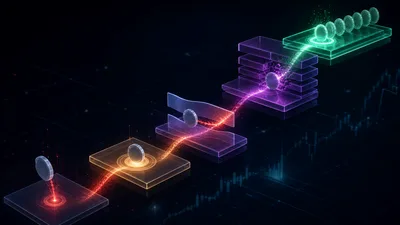
फिल सिमुलेशन: क्लोज-प्राइस फैंटेसी से क्यू-अवेयर हकीकत तक की सीढ़ी
फिल सिमुलेशन फिडेलिटी के पाँच पायदान — क्लोज-प्राइस फिल्स से लेकर प्रोबेबिलिस्टिक क्यू-पोज़िशन मॉडल तक। पार्शियल फिल्स को एक स्टेट मशीन के रूप में, लिमिट-फिल प्रोबेबिलिटी बाउंड्स को एक PnL ब्रैकेट के रूप में, और लाइव फिल्स के विरुद्ध एक कैलिब्रेशन लूप।
TWAP बनाम VWAP बनाम POV: एक execution benchmark चुनना (और यह जानना कि हर एक कब आपसे झूठ बोलता है)
TWAP, VWAP और POV एक volume forecast पर लगाया गया दांव हैं। हम हर scheduler की छिपी हुई मान्यताओं को खोलकर देखते हैं, crypto intraday volume curves बनाते हैं, और तीनों को replayed L2 data पर आमने-सामने चलाते हैं।

Almgren-Chriss बिना लाग-लपेट के: ऑप्टिमल एक्जीक्यूशन जिसे आप एक दोपहर में लागू कर सकते हैं
Almgren-Chriss ऑप्टिमल एक्जीक्यूशन मॉडल का पूरा डिराइवेशन: लीनियर इम्पैक्ट, sinh/cosh ट्रैजेक्टरी, एफिशिएंट फ्रंटियर, और Binance L2 व ट्रेड डेटा से eta, gamma, और sigma को कैलिब्रेट करने के लिए काम करने वाला Python कोड।
ईमानदार नकारात्मक परिणाम: हजारों बैकटेस्ट, पांच मेजर, कोई मजबूत एज नहीं
सर्च-एंड-ओवरफिट कथानक का चरम बिंदु, और यह एक नकारात्मक परिणाम पर खत्म होता है — जो सही है। ETHUSDT पर एक सिंगल-सिंबल ड्यूल-टाइमफ्रेम सर्च ने एक ऐसा कॉन्फ़िग खोजा जो out-of-sample पर +16.35% और एक अछूते holdout पर +2.62% देता था; Deflated Sharpe Ratio ने, ~37,000 ट्रायल को ध्यान में रखते हुए, इसे घटाकर 0.00 कर दिया। पांच मेजर (ETH/BTC/SOL/BNB/XRP, प्रत्येक ~1.18M 1m बार) पर एक क्रॉस-इंस्ट्रूमेंट पास, median out-of-sample के आधार पर चयन करते हुए, इसे हमेशा के लिए खत्म कर देता है: dual DSR 0.24 / PBO 0.264, triple DSR 0.14 / PBO 0.327 — दोनों गेट फेल हो जाते हैं। चैंपियन 5 में से 1 सिंबल पर लाभदायक है और बाकी पर नकारात्मक। एंटी-ओवरफिट तंत्र इसी के लिए है: आपको शोर के सबसे अच्छे हिस्से को अल्फा के रूप में शिप करने से रोकने के लिए।
मल्टी-Timeframe Backtests में No Look-Ahead साबित करना: भविष्य को Perturb करें, साबित करें कि अतीत उसे देख नहीं सकता
मल्टी-timeframe backtests एक बनते हुए higher-timeframe bar के जरिए भविष्य लीक करते हैं, जिसका final close अभी अस्तित्व में ही नहीं है। सिर्फ code review करके भरोसा नहीं जीता जा सकता — इसे टेस्ट करना ही पड़ता है। हम live bot के closed-bar rule को बिल्कुल वैसा ही reproduce करते हैं, फिर shifted-future probe से साबित करते हैं कि कोई leakage नहीं है: भविष्य के हर bar को perturb करें और assert करें कि अतीत का हर signal और trade bitwise अपरिवर्तित रहता है। 25/25 parity checks, और probe में असली पकड़ (teeth) है।
GPU कब अपनी कीमत वसूलता है: पैरामीटर-स्वीप की roofline, जहाँ सुर्खियों वाला 167x असल में 27x एल्गोरिदम गुणा 6.2x हार्डवेयर है
CPU पर GPU की बढ़त batch size के साथ बढ़ती है — हमारे मल्टी-टाइमफ्रेम इंडिकेटर precompute पर प्रति कॉल एक combo पर 54.5x से लेकर 61 पर 359.6x तक — क्योंकि छोटा स्वीप kernel-launch और transfer overhead की भरपाई नहीं कर पाता। हम सुर्खियों वाले 167x को 27x की एल्गोरिदमिक जीत (जो CPU को भी उतना ही तेज़ करती है) गुणा 6.2x की हार्डवेयर जीत में तोड़ते हैं, दिखाते हैं कि GPU बनाम सर्वश्रेष्ठ-CPU की असली बढ़त सिंगल-टाइमफ्रेम पर सिर्फ़ 3.2x और मल्टी पर 6.2x है, और एक निर्णय-गाइड देते हैं कि GPU खरीदने लायक बनने से पहले स्वीप कितना चौड़ा होना चाहिए।

GPU प्रिसिजन ट्रैप: Apple Metal पर fp32 बैकटेस्ट चुपचाप गार्बेज नतीजे कैसे देता है
Apple के Metal GPU में float64 होता ही नहीं। किसी vectorized बैकटेस्ट को उस पर भोलेपन से पोर्ट कर दीजिए, और वह लुभावना prefix-sum WMA fp32 में overflow कर जाता है — अधिकतम relative error 211× — फिर भी वह चलता रहता है और plausible दिखने वाले नंबर लौटाता है। इसका फिक्स ज्यादा precision नहीं है; यह एक अलग formulation है: एक direct windowed convolution, जो fp32 में 8×10⁻⁷ तक सुरक्षित है और single-thread numba से 55.9× तेज है। यह लेख इसी ट्रैप, उसके पीछे के arithmetic, और यह साबित करने के तरीके पर है कि आप खुद उसमें फंसे तो नहीं।