Eugen Soloviov
Trading-systems engineer
Trading-systems engineer building bots since 2017: cross-exchange arbitrage (connected up to 30 venues), cointegration-based pairs arbitrage across spot and futures, scalping, news and sentiment-driven strategies, trend algorithms, and portfolio management and balancing algorithms. Also builds sub-millisecond order execution, big-data warehouses, backtesting engines, AI agents, and trading interfaces (incl. open-source profitmaker.cc). Stack: JS/TS, Python, Rust/Zig/Go, DevOps, backend, frontend, architecture.
Artikelen

+702% on SOL. Where Is Jev in This Backtest?
We ran a trend strategy across 15 crypto pairs, checked costs and access to future candles, and tested Jev separately. Where did profits appear, and why can't we promise them in live trading yet?

XGBoost for Return Direction: Class Imbalance and Decision Thresholds
Return-direction classifiers are imbalanced problems, and 0.5 is the wrong decision threshold. Comparing scale_pos_weight, focal loss, and precision-constrained threshold optimization on crypto data — plus the engineering differences between XGBoost, LightGBM, and CatBoost.

Transfer Entropy: Which Way Does Information Flow Between Crypto Assets?
DCC-GARCH tells you when crypto dependence tightens. Transfer entropy tells you which way it points. A directed information-flow measure, its null calibration, and an honest account of what it does and does not add over average pairwise correlation.

Trade Classification When You Have No Side Flag: Tick, Quote, Lee-Ready, BVC
Reconstructing trade direction from OHLCV, bar history, or venues without an aggressor flag — the classic rules, the stale-quote problem, bulk volume classification, and how to measure them against crypto's free ground truth.

Onregelmatige tijd in tick-modellen: continue tijdcoderingen versus gewone positionele inbedding
Sequentiemodellen die gevoed worden met tekengegevens gaan nog steeds uit van een regelmatige tussenruimte. Drie manieren om een Transformer te vertellen wanneer een tick daadwerkelijk heeft plaatsgevonden: continue codering op leerbare tijdschaal, ODE-RNN latente status en delta_t als een duidelijk kenmerk – en de ablatie die tussen deze twee beslist.

Synthetische controlemethoden voor het evalueren van handelsstrategieën
Deze serie heeft de selectieroute tot een vals voordeel geprijsd: DSR prijst de winnaar, PBO prijst de zoektocht. Geen van beide heeft betrekking op verwarring: de strategie die geld opleverde omdat de volatiliteit verdubbelde in de week dat u deze gebruikte. De Synthetic Control Method bouwt een gewogen contrafeitelijk onderzoek op uit een donorpool van onaangeroerde instrumenten en geeft u een vervalsingscriterium en een placebo-p-waarde.

Probabilistische voorspellingen scoren: CRPS, PIT-kalibratie en DeepAR
Hoe je een voorspellende verdeling eerlijk kunt evalueren: CRPS als een goede scoreregel, het PIT-histogram als kalibratiediagnostiek en DeepAR-sampling in GluonTS.

Op natuurkunde geïnformeerde neurale netwerken voor optieprijzen
Door de PDE's van Heston, free-boundary en jump-diffusion pricing in een neuraal netwerkverlies te stoppen - het log-prijsresidu, de mixed-partial autograd-truc, en wat nog moet worden gemeten.
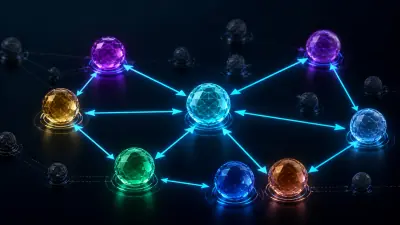
PCMCI: Causale ontdekking in multivariate crypto-tijdreeksen
Hoe de tweetraps MCI-test van PCMCI gerichte causale verbanden tussen crypto-activa herstelt waar correlatie en bivariate Granger dat niet kunnen: de constructie, de tigramietpijplijn en het onderzoek naar echte gegevens die het nog steeds nodig heeft.

Order Flow Imbalance: The Cont-Kukanov-Stoikov Event Decomposition
Turning raw book updates into a signed flow quantity: the CKS event decomposition, multi-level OFI with PCA reduction, and Lee-Ready trade classification — plus an honest accounting of what the headline R-squared actually measures.

Neural ODEs: Does Continuous Time Beat a Delta-Time Feature?
Neural ODEs, Neural SDEs and continuous normalizing flows for irregularly-sampled market data — and the one ablation that decides whether continuous dynamics are worth their solver cost.

Multi-Task Learning for Simultaneous Price, Volume, and Volatility Prediction
Does jointly predicting return, volume, and volatility actually help? Measuring loss-balancing schemes and diagnosing negative transfer through gradient cosine similarity — with a classical baseline and purged walk-forward folds.