Eugen Soloviov
Trading-systems engineer
Trading-systems engineer building bots since 2017: cross-exchange arbitrage (connected up to 30 venues), cointegration-based pairs arbitrage across spot and futures, scalping, news and sentiment-driven strategies, trend algorithms, and portfolio management and balancing algorithms. Also builds sub-millisecond order execution, big-data warehouses, backtesting engines, AI agents, and trading interfaces (incl. open-source profitmaker.cc). Stack: JS/TS, Python, Rust/Zig/Go, DevOps, backend, frontend, architecture.
Articles

+702% on SOL. Where Is Jev in This Backtest?
We ran a trend strategy across 15 crypto pairs, checked costs and access to future candles, and tested Jev separately. Where did profits appear, and why can't we promise them in live trading yet?
XGBoost for Return Direction: Class Imbalance and Decision Thresholds
Return-direction classifiers are imbalanced problems, and 0.5 is the wrong decision threshold. Comparing scale_pos_weight, focal loss, and precision-constrained threshold optimization on crypto data — plus the engineering differences between XGBoost, LightGBM, and CatBoost.

Transfer Entropy: Which Way Does Information Flow Between Crypto Assets?
DCC-GARCH tells you when crypto dependence tightens. Transfer entropy tells you which way it points. A directed information-flow measure, its null calibration, and an honest account of what it does and does not add over average pairwise correlation.

Trade Classification When You Have No Side Flag: Tick, Quote, Lee-Ready, BVC
Reconstructing trade direction from OHLCV, bar history, or venues without an aggressor flag — the classic rules, the stale-quote problem, bulk volume classification, and how to measure them against crypto's free ground truth.

Irregular Time in Tick Models: Continuous-Time Encodings vs. Plain Positional Embeddings
Sequence models fed tick data still assume regular spacing. Three ways to tell a Transformer when a tick actually happened — learnable-timescale continuous encoding, ODE-RNN latent state, and delta_t as a plain feature — and the ablation that decides between them.

Synthetic Control Methods for Evaluating Trading Strategies
This series has priced the selection route to a false edge — DSR prices the winner, PBO prices the search. Neither touches confounding: the strategy that made money because volatility doubled the week you deployed it. The Synthetic Control Method builds a weighted counterfactual from a donor pool of untouched instruments and gives you a falsification criterion and a placebo p-value.
Scoring Probabilistic Forecasts: CRPS, PIT Calibration, and DeepAR
How to evaluate a predictive distribution honestly — CRPS as a proper scoring rule, the PIT histogram as a calibration diagnostic, and DeepAR sampling in GluonTS.
Physics-Informed Neural Networks for Options Pricing
Putting the Heston, free-boundary, and jump-diffusion pricing PDEs into a neural network loss — the log-price residual, the mixed-partial autograd trick, and what still needs measuring.
PCMCI: Ko'p o'zgaruvchan kriptovalyuta seriyasida sabablarni aniqlash
PCMCI ning ikki bosqichli MCI testi qanday qilib korrelyatsiya va ikki o'zgaruvchan Granger qila olmaydigan kripto aktivlari o'rtasidagi yo'naltirilgan sababiy bog'lanishni tiklaydi - qurilish, tigramit quvur liniyasi va unga hali kerak bo'lgan real ma'lumotlarni o'rganish.

Tartib oqimi nomutanosibligi: Cont-Kukanov-Stoikov hodisasining parchalanishi
Xom kitob yangilanishlarini imzolangan oqim miqdoriga aylantirish: CKS hodisasining parchalanishi, PCA qisqarishi bilan ko'p darajali OFI va Lee-Ready savdo tasnifi - bundan tashqari, R-kvadrat sarlavhasi aslida nimani o'lchaganini halol hisobga olish.

Neyron ODElar: Uzluksiz vaqt Delta-Vaqt xususiyatidan ustun turadimi?
Neyron ODE'lar, Neyron SDE'lar va tartibsiz tanlangan bozor ma'lumotlari uchun doimiy normalizatsiya oqimlari - va uzluksiz dinamika ularning hal qiluvchi narxiga arziydimi yoki yo'qligini hal qiladigan bitta ablasyon.
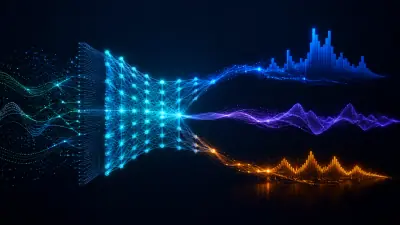
Bir vaqtning o'zida narx, hajm va o'zgaruvchanlikni bashorat qilish uchun ko'p vazifani o'rganish
Qaytish, hajm va o'zgaruvchanlikni birgalikda bashorat qilish haqiqatan ham yordam beradimi? Yo'qotishlarni muvozanatlash sxemalarini o'lchash va gradient kosinus o'xshashligi orqali salbiy uzatish diagnostikasi - klassik asosiy chiziq va tozalangan oldinga burmalar bilan.