AI Hedge Fund: жасалма интеллект талдоочулары бүтүмдөргө добуш берген көп агенттүү фонд

AI Hedge Fund — LLM менен трейдингдин кесилишиндеги эң көп талкууланган ачык баштапкы коддогу долбоорлордун бири. GitHub-та 12 000ден ашык жылдыз, жүздөгөн форк, Twitter-де ынтызар жазуулар. Бирок хайпты алып салып, олуттуу карасак: баалуулук "акча тапкан нейрожелиде" эмес, архитектуралык үлгүдө — жасалма интеллект талдоочуларынын тобун ар бири өз тажрыйбасын кошуп, бирок эч бири портфелди жарып жибербей тургандай кылып кантип уюштурууда.
Долбоордун автору тарабынан эскертүү: Бул чыныгы акча үчүн система эмес — бул эксперименттер үчүн кум чака.
Негизги идея: бир гуру эмес, комитет
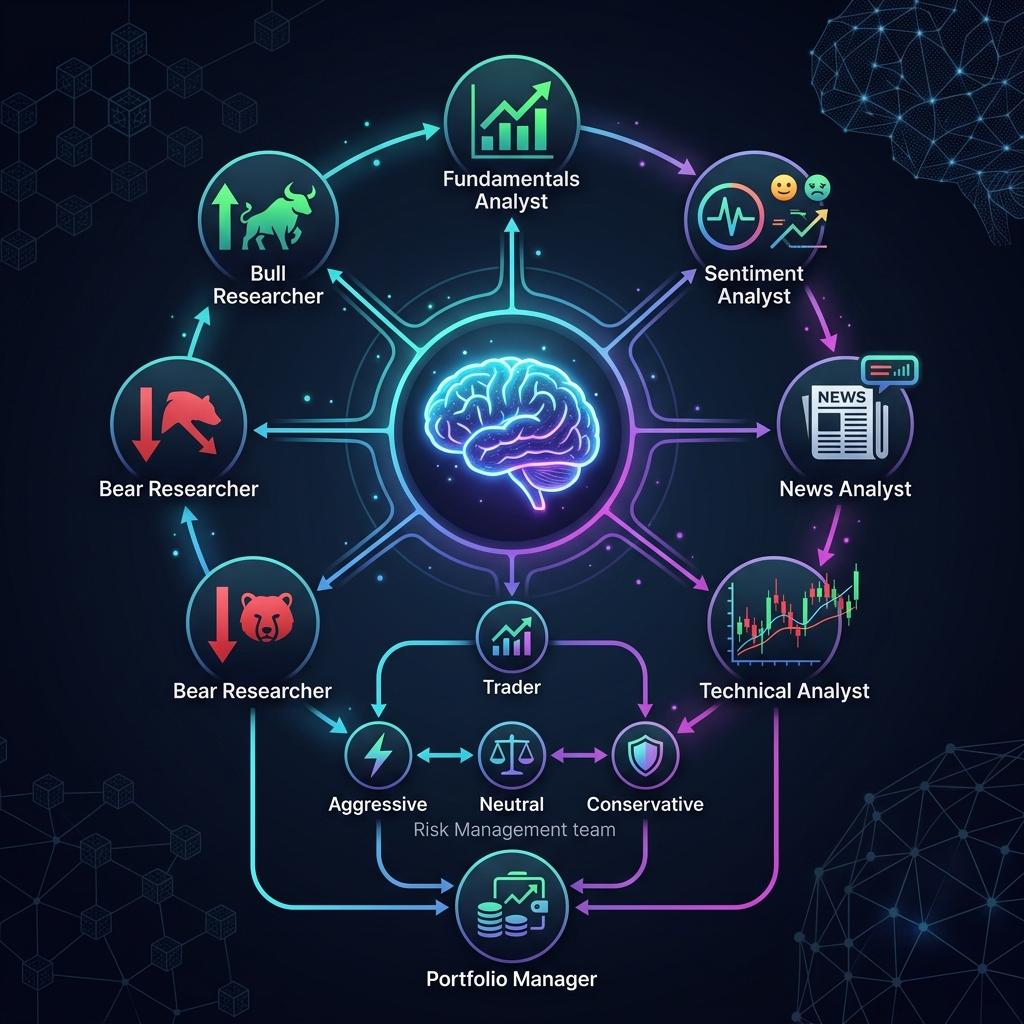
Жасалма интеллект трейдингботторунун көбү жөнөкөй: бир LLM маалымат алат → сигнал жаратат → бүтүм. AI Hedge Fund түп-тамырынан башкача иштейт: ал ар кандай ой жүгүртүү стили бар агенттердин тобун колдонот.
Ар бир агент — өзүнүн промпту жана маалымат булактары бар адистештирилген LLM:
| Агент | Талдоо стили | Эмнени изилдейт |
|---|---|---|
| Value Analyst | Баалоо | P/E, P/B, DCF, маржа |
| Technical Analyst | Техникалык талдоо | RSI, MACD, жылма орточолор, деңгээлдер |
| Sentiment Analyst | Рыноктун маанайы | Жаңылыктар, социалдык тармактар, тон |
| Fundamentals Analyst | Фундаменталдык талдоо | Киреше, пайда, карыз, өсүш |
| Risk Manager | Тобокелдикти көзөмөлдөө | Туруксуздук, корреляциялар, лимиттер |
| Portfolio Manager | Акыркы чечим | Пикирлерди чогултат, буйрутмаларды түзөт |
Агенттер удаалаш иштешет: адегенде ар бир талдоочу өз баасын берет (себеби менен сатып алуу/сатуу/кармоо), андан кийин тобокелдик менеджери уруксат берилээрин текшерет, ошондон кийин гана портфель менеджери конкреттүү аракетти калыптандырат.
"Адегенде тобокелдик, кийин аракет" эмне үчүн туура

Долбоордун эң күчтүү бөлүгү "LLM сыйкыры" эмес — бул чечим кабыл алуу ырааттуулугу.
Жасалма интеллект трейдинг системаларындагы классикалык ката — моделге толук эркиндик берүү: "мына $100K, каалаганыңды кыл." AI Hedge Fund башкача иштейт:
-
Тобокелдик бюджетин баалоо. Кайсы бир агент бүтүм сунуштаардан мурун, система портфель канча тобокелдикти сиңире аларын баалайт — туруксуздукту, учурдагы позицияларды жана активдердин корреляциясын эске алуу менен.
-
Көлөмдү чыпкалоо. Агент бүт депозитке позицияны "элестете" албайт. Эгер лимит 5% гана уруксат берсе — анда 5% гана, сигнал канчалык ынандырарлык болбосун.
-
Пикирлерди топтоо. Портфель менеджери "сатып алуу/сатуу" эле эмес, ар бир талдоочунун майда-чүйдөсүнө чейинки жүйөлөрүн көрөт. Пикирлердин ар түрдүүлүгү — ката эмес, бул — мүмкүнчүлүк: эгер вэлью-талдоочу "арзан" десе, бирок техникалык талдоочу "төмөндөө тренди" десе, позициянын көлөмү азаят.
Инвестицияда сигнал гана эмес, позиция көлөмүнө укук маанилүү. Бул foundation-first ыкмасы: адегенде чектөөлөрдүн бекем алкагы, кийин "акыл".
Бул практикада эмне берет
- Портфелдеги импульсивдүү бурмалоолордун мүмкүнчүлүгү азаят.
- Бүтүмдүн көлөмү эмне үчүн так ошондой экенине так логика.
- Мыкты шайкеш бэктестинг эксперименттери.
- Итерациялар үчүн ыңгайлуу негиз: тобокелдик алкагын бузбай туруп талдоочуларды жакшыртса болот.
Натыйжаларды өзүн-өзү алдабай кантип окуу керек
Мындай ар кандай долбоорду, анын кооз жүгүрүшүнө гана карасаң, "ашыкча даңазалоо" оңой. Мына адилет баалоо тизмеси:
- Рыноктор боюнча туруктуулук. Ал тренддик рынокторго караганда флэт рынокторунда да ушундай эле иштейби?
- Стресс-тесттер. Дүрбөлөң, гэп, курч бурулуш учурунда эмне болот?
- Ашыкча ыңгайлашуу (overfitting). Промпт логикасы белгилүү тикерлерге жана мезгилдерге ыңгайлаштырылганбы?
- Маалымат сапаты. Комиссиялар, слиппедж жана сплиттер эске алынганбы?
- Кайра чыгаруу мүмкүнчүлүгү. Ошол эле промпттор бир жумадан кийин ошол эле натыйжаны береби (LLM детерминисттик эмес)?
Чектөөлөр жана адилет баа
AI Hedge Fund эмне эмес экенин түшүнүү маанилүү:
- Бул продакшн система эмес. Чыныгы аткаруу жок, ликвиддүүлүктү моделдөө жок.
- LLM-ге көз карандылык. Чечимдин сапаты толугу менен моделдин сапаты менен аныкталат. GPT-4 менен GPT-3.5 ар түрдүү натыйжа берет.
- Тарыхый бэктест жок. Системаны 5 жылдык маалыматта иштетип, эквити-ийри сызыгын алуу мүмкүн эмес.
- Детерминизм. Температурасы > 0 болгон LLM-дер бирдей киргизүүлөргө ар кандай жооп берет.
Шилтемелер
- 💻 GitHub: virattt/ai-hedge-fund
- 📄 Лицензия: MIT
Корутунду
AI Hedge Fund "акча табуу машинасы" катары эмес, ой жүгүртүү алкагы катары пайдалуу:
- Талдоочу ролдорун бөлүп кара.
- Идея жаратууну тобокелдикти көзөмөлдөөдөн бөл.
- Чечимдерди түшүндүрүлмө кыл.
- Гипотезаларды текшер, бирок бэктестингди пайда кепилдиги менен чаташтырба.
Үйрөнүү жана прототиптөө үчүн — бекем иш. Продакшн үчүн кийинки катмар керек: реалдуу аткаруу, маалыматты текшерүү, model drift көзөмөлү жана промпт деңгээлинде гана эмес, эрежелер деңгээлиндеги чыныгы тобокелдик комитети.
Authors

Trading-systems engineer
Trading-systems engineer building bots since 2017: cross-exchange arbitrage (connected up to 30 venues), cointegration-based pairs arbitrage across spot and futures, scalping, news and sentiment-driven strategies, trend algorithms, and portfolio management and balancing algorithms. Also builds sub-millisecond order execution, big-data warehouses, backtesting engines, AI agents, and trading interfaces (incl. open-source profitmaker.cc). Stack: JS/TS, Python, Rust/Zig/Go, DevOps, backend, frontend, architecture.
Read More

Daily Stock Analysis: Байкоо тизмесин күндөлүк чечим кабыл алуу панелине айландырган AI система

algo-investor-skills: алдамчылыктан корголгон инвестор сунушун түзгөн Claude Code скилдери