OneTick : la plateforme où les bourses attrapent les spoofers et les hedge funds chassent l'alpha

Bloomberg s'adresse aux analystes qui ont besoin d'un terminal. TradingView s'adresse aux traders particuliers qui ont besoin de graphiques. Mais quand une bourse veut détecter en temps réel qu'un trader sur une place de marché place de faux ordres pour faire bouger le prix sur une autre — elle a besoin d'OneTick.
OneTick est une base de données de séries temporelles et un moteur d'analytique en streaming de niveau entreprise, conçu spécifiquement pour les marchés financiers. Ce n'est pas une TSDB généraliste comme TimescaleDB ou InfluxDB. Ce n'est pas non plus un simple entrepôt columnar rapide comme ClickHouse. C'est une plateforme qui comprend les données financières : relations trade/quote, profondeur du carnet d'ordres, opérations sur titres et corrélations inter-marchés. Ses clients incluent des bourses, des banques d'investissement, des hedge funds, des teneurs de marché et des courtiers.
Trois piliers d'OneTick
La plateforme résout trois problèmes fondamentalement différents avec un seul moteur :
| Pilier | Qui l'utilise | Pourquoi |
|---|---|---|
| Surveillance de marché (Market Surveillance) | Bourses, régulateurs, services de conformité | Détection de manipulation, conformité MiFID II / MAR / SEC / FINRA |
| Recherche quantitative (Quant Research) | Hedge funds, desks propriétaires | Génération d'alpha, backtesting de stratégies, analyse de microstructure |
| Trading Analytics | Desks sell-side, courtiers | TCA, suivi de la best execution, contrôle de liquidité |
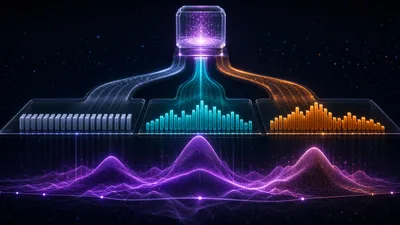
L'idée clé : les trois charges de travail tournent sur un seul moteur qui traite à la fois les données historiques et temps réel. Pas besoin d'un système de streaming séparé et d'un système de backtesting séparé — c'est une seule plateforme.
Architecture : le graphe orienté acyclique (DAG) comme langage de requête

La décision architecturale centrale d'OneTick : les requêtes ne sont pas construites en SQL (bien que le SQL soit aussi pris en charge), mais sous forme de graphe orienté acyclique (DAG) d'Event Processors (EPs).
Qu'est-ce qu'un Event Processor
Un Event Processor est une unité atomique de calcul. Chaque EP effectue une opération unique : filtrage, agrégation, jointures, calcul de champs dérivés, calcul du VWAP ou reconstruction du carnet d'ordres. Les données (ticks) circulent à travers une chaîne d'EPs, des sources vers les puits.
Analogie : une chaîne de montage dans une usine. Un tick (un enregistrement horodaté) entre dans le graphe par la gauche, traverse une chaîne de processeurs, et la sortie est un résultat fini : une alerte, une métrique agrégée ou un signal.
Pourquoi un DAG plutôt que SQL
| Aspect | Approche SQL | DAG (Event Processors) |
|---|---|---|
| Traitement de flux | Nécessite un framework séparé (Flink, Spark) | Natif — le même graphe fonctionne aussi bien sur les flux que sur l'historique |
| Pipelines complexes | Sous-requêtes imbriquées, CTE, fonctions de fenêtrage | Composition visuelle de nœuds — chaque nœud est compréhensible isolément |
| Réutilisabilité | Copier-coller de blocs SQL | Les EPs sont des composants réutilisables branchés dans différents graphes |
| Débogage | EXPLAIN ANALYZE + tâtonnements |
Les données peuvent être interceptées à n'importe quel nœud du graphe |
| Parallélisme | Décidé par l'optimiseur du SGBD | Parallélisation explicite par symboles, dates, cœurs CPU |
Les graphes peuvent être construits visuellement via le designer intégré ("paint-a-canvas") ou de façon programmatique via l'API Python.
Performance
Chiffres avancés par OneTick (et confirmés par l'industrie) :
| Métrique | Valeur |
|---|---|
| Ingestion de ticks | >1 000 milliards de ticks/jour |
| Traitement en masse | >10 millions de ticks/sec/cœur |
| Précision d'horodatage | Sub-milliseconde |
| Profondeur historique | Données depuis 1970 (via TickData) |
| Classes d'actifs | Actions, futures, options, revenu fixe, crypto |
Pour référence : un flux L2 typique pour une seule action liquide (AAPL) génère environ 100 000 messages/sec aux heures de pointe. Pour l'ensemble du marché actions américain — des centaines de millions de messages par jour. OneTick est conçu pour absorber tout cela avec de la marge.
Surveillance de marché : là où OneTick est la référence du secteur

La surveillance de marché est sans doute le cas d'usage le plus fort d'OneTick. La plateforme est utilisée par les bourses elles-mêmes pour surveiller l'activité de trading.
Quelles manipulations sont détectées
| Manipulation | Ce qui se passe | Comment c'est détecté |
|---|---|---|
| Spoofing | Le trader place un ordre important pour faire bouger le prix, puis l'annule avant exécution | Analyse des ratios ordres placés/annulés, vitesse d'annulation |
| Layering | Plusieurs ordres à divers niveaux de prix pour créer l'illusion d'une offre/demande | Motif "en escalier" dans le carnet d'ordres + corrélation avec les exécutions du côté opposé |
| Wash Trading | Le trader échange avec lui-même pour créer un volume artificiel | Recoupement de comptes, analyse temporelle, adresses IP |
| Front-Running | Le courtier trade avant un ordre client important | Corrélations temporelles entre trades propriétaires et flux clients |
| Marking the Close | Trades délibérés en fin de séance pour manipuler le cours de clôture | Analyse de l'activité des dernières minutes vs. moyenne intrajournalière |
| Quote Stuffing | Génération/annulation massive d'ordres pour ralentir les concurrents | Fréquence anormale de messages, ratio ordre/trade |
| Insider Trading | Trading basé sur des informations non publiques | Corrélation de schémas inhabituels avec des événements d'entreprise |
Surveillance cross-market et cross-asset
Le cas le plus complexe : manipulation entre marchés. Un trader fait bouger le prix des futures sur une bourse tout en profitant d'une option liée sur une autre. Ou négocie un ADR au NYSE en sachant ce qui va arriver à l'action sous-jacente au LSE.
OneTick agrège les données de multiples places de négociation dans un flux unique et recherche des schémas cross-market, même lorsque les liens structurels entre instruments ne sont pas évidents.
Couverture réglementaire
| Régulateur / norme | Juridiction |
|---|---|
| MiFID II / MAR | Europe |
| SEC / FINRA | États-Unis |
| ASIC | Australie |
| IIROC | Canada |
IA « boîte blanche » pour le scoring d'alertes
Le problème classique de la surveillance, ce sont les faux positifs. Avec 10 000 alertes par jour, une équipe de conformité de 5 personnes n'a aucune chance de toutes les examiner. OneTick utilise du ML « boîte blanche » : les modèles évaluent la probabilité d'une manipulation réelle tout en montrant la raison — exactement quels facteurs ont conduit à un score élevé. Pas une boîte noire, mais un modèle explicable, ce qui est crucial pour les régulateurs.
Recherche quantitative : des ticks à l'alpha
Pour les hedge funds et les desks quantitatifs, OneTick n'est pas qu'un entrepôt de données. C'est un environnement de recherche où données et analytique cohabitent au même endroit.
Ce que l'on peut faire
-
Analyse de la microstructure de marché. Reconstruire le carnet d'ordres à n'importe quel instant du passé, analyser la profondeur de liquidité, les spreads et le déséquilibre du flux d'ordres.
-
Backtesting de stratégies. Exécuter des stratégies de trading sur des données tick historiques avec une précision point-in-time. Pas de biais look-ahead — les données sont restituées strictement dans l'ordre où elles étaient disponibles en temps réel.
-
Génération de signaux. Tester des hypothèses : « Si le spread bid-ask s'élargit de 3σ avec un volume en hausse — est-ce un prédicteur de retournement ? » Sur des décennies de données, sur tous les instruments.
-
ML sur données tick. MDRE (Market Data Research Environment) — une API façon Python/Pandas pour la data science. Réglage d'hyperparamètres, validation croisée, mise en service de modèles — directement sur les données tick, sans export vers un système séparé.
Méthodes d'accès
| Interface | Pour qui |
|---|---|
| API Python / Pandas | Data scientists, ingénieurs ML |
| SQL | Analystes familiers des bases de données relationnelles |
| DAG Designer | Construction visuelle de requêtes |
| Langage de graphe propriétaire | Utilisateurs expérimentés d'OneTick |
Trading Analytics : TCA et best execution
Depuis MiFID II, la best execution n'est pas une recommandation — c'est une obligation légale. Les courtiers doivent prouver qu'ils ont exécuté les ordres clients au meilleur prix disponible.
Transaction Cost Analysis (TCA)
OneTick permet de comparer les prix d'exécution à des benchmarks :
| Benchmark | Ce qu'il mesure |
|---|---|
| VWAP | Prix moyen pondéré par le volume sur une période |
| Arrival Price | Prix au moment de la réception de l'ordre |
| Implementation Shortfall | Écart entre la décision de trader et l'exécution réelle |
| Spread Cost | Pertes liées au spread bid-ask |
Suivi de liquidité en temps réel
Pour les desks FX et les traders algorithmiques : OneTick compare les spreads et volumes actuels aux moyennes historiques. Si le spread EUR/USD s'élargit de 2σ par rapport à la moyenne mensuelle — c'est une anomalie, et l'algorithme peut ralentir l'exécution ou basculer vers une place de négociation alternative.
Déploiement : on-prem et cloud
| Modèle | Description |
|---|---|
| On-Premises | Contrôle total, les données ne quittent jamais le périmètre. Pour les banques avec des exigences strictes de résidence des données |
| OneTick Cloud | Service entièrement managé. Mise à l'échelle sans gestion d'infrastructure |
| Hybride | Données historiques dans le cloud, temps réel on-prem à côté du moteur de trading |
Comparaison avec les alternatives
| Fonctionnalité | OneTick | kdb+ (KX) | QuestDB | TimescaleDB |
|---|---|---|---|---|
| Spécialisation | Finance — prête à l'emploi | Finance — via du développement | TSDB généraliste | TSDB généraliste |
| Langage de requête | DAG + SQL + Python | q (vectoriel, courbe d'apprentissage raide) | SQL | SQL |
| Streaming + historique | ✅ Moteur unifié | ✅ (kdb Insights) | ⚠️ Limité | ⚠️ Via extensions |
| Surveillance | ✅ Modèles prêts à l'emploi | ❌ À construire | ❌ | ❌ |
| TCA | ✅ | ❌ À construire | ❌ | ❌ |
| Ingestion | >10M ticks/sec/cœur | ~10M+ ticks/sec/cœur | ~3M+ lignes/sec | ~1M+ lignes/sec |
| Coût de développement | Plus faible (EPs prêts) | Élevé (spécialistes q) | Faible (SQL) | Faible (PostgreSQL) |
| Open Source | ❌ Entreprise | ❌ Entreprise | ✅ Apache 2.0 | ✅ Apache 2.0 |
| Cloud | ✅ OneTick Cloud | ✅ kdb Insights | ✅ QuestDB Cloud | ✅ Timescale Cloud |
Quand choisir OneTick
- Vous êtes une bourse ou un régulateur et avez besoin de surveillance avec des modèles de détection prêts à l'emploi.
- Vous êtes un desk sell-side et les régulateurs exigent des rapports TCA et de best execution.
- Vous êtes un fonds quantitatif et avez besoin d'une plateforme où recherche historique et suivi en direct sont le même outil.
Quand OneTick est surdimensionné
- Vous êtes un trader particulier ou une petite équipe crypto. OneTick est un produit entreprise avec une tarification entreprise.
- Vous avez besoin juste d'une base de données sans analytique. QuestDB ou TimescaleDB seraient plus raisonnables.
- Vos données ne sont pas des ticks financiers. IoT, monitoring, logs — c'est une autre niche, et OneTick y est surdimensionné.
Écosystème : OneTick + TickData
OneTick est étroitement intégré à TickData — l'un des plus grands fournisseurs de données tick historiques. Couverture :
- Actions américaines — depuis 1970
- Bourses mondiales — plus de 80 places de négociation
- Toutes les classes d'actifs — actions, futures, options, revenu fixe, FX
- Crypto — spot et dérivés
Pour la recherche quantitative, c'est crucial : plus l'historique est profond, plus le backtest est fiable. Des données depuis 1970 permettent de tester des stratégies à travers des dizaines de régimes de marché, y compris les krachs de 1987, 2000, 2008 et COVID-2020.
Liens
- 🌐 OneTick : onetick.com
- 🌐 OneTick Use Cases : onetick.com/use-cases
- 📊 TickData : tickdata.com
- 🌐 kdb+ (KX) : kx.com
- 🌐 QuestDB : questdb.io
- 🌐 TimescaleDB : timescale.com
Conclusion
OneTick n'est pas « juste une nouvelle base de données de séries temporelles ». C'est une plateforme intégrée verticalement pour les données financières, qui répond à trois besoins critiques avec un seul moteur : la surveillance pour les bourses et la conformité, la recherche quantitative pour les hedge funds, et le TCA/best execution pour le sell-side. L'architecture DAG bâtie sur des Event Processors est une solution élégante pour un monde où les mêmes données doivent être analysées à la fois en temps réel et sur un historique profond.
Le principal piège au moment du choix : ne comparez pas OneTick à QuestDB ou TimescaleDB comme une « base de données contre base de données ». OneTick est une base de données + un moteur d'analytique + des applications métier prêtes à l'emploi (modèles de surveillance, benchmarks TCA, rapports de conformité). Si vous avez juste besoin d'une ingestion rapide de ticks — prenez QuestDB. Si vous avez besoin du cycle complet, de l'ingestion de données jusqu'au reporting réglementaire — OneTick n'est en concurrence qu'avec kdb+, et l'emporte grâce à une barrière à l'entrée plus basse (pas besoin d'apprendre q) et des modules métier déjà prêts.
Pour les équipes d'algotrading qui construisent leur propre infrastructure, OneTick est un point de référence : comment devrait être conçue une plateforme qui traite mille milliards de ticks par jour tout en permettant à un analyste de construire une requête visuellement, sans écrire une seule ligne de code.
Authors
Trading-systems engineer
Trading-systems engineer building bots since 2017: cross-exchange arbitrage (connected up to 30 venues), cointegration-based pairs arbitrage across spot and futures, scalping, news and sentiment-driven strategies, trend algorithms, and portfolio management and balancing algorithms. Also builds sub-millisecond order execution, big-data warehouses, backtesting engines, AI agents, and trading interfaces (incl. open-source profitmaker.cc). Stack: JS/TS, Python, Rust/Zig/Go, DevOps, backend, frontend, architecture.
Read More
PCMCI: Causal Discovery in Multivariate Crypto Time Series
Implementation shortfall et TCA maison : mesurer ce que l'exécution vous coûte réellement