पेयर्स ट्रेडिंग में डिस्टेंस एप्रोच: Rust के साथ इम्प्लीमेंटेशन और विश्लेषण
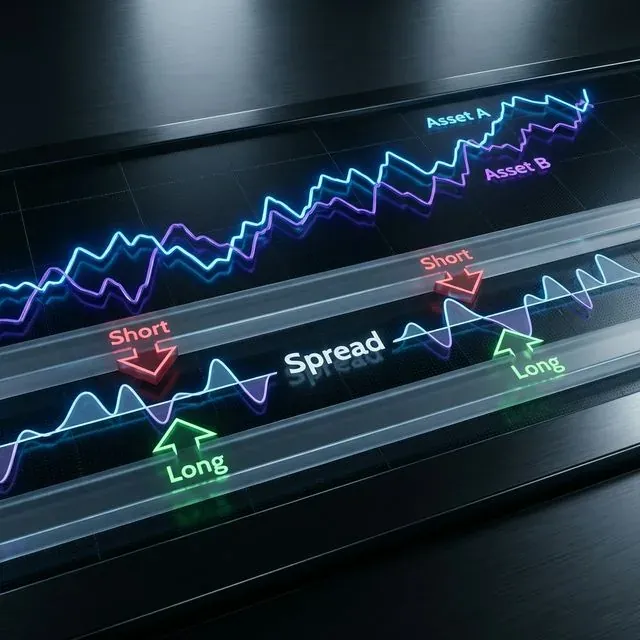
पेयर्स ट्रेडिंग में डिस्टेंस एप्रोच अपनी सुरुचिपूर्ण सरलता और प्रभावशीलता के कारण काफी लोकप्रिय हो गया है। यह तकनीक सांख्यिकीय मापों के जरिए एसेट पेयर्स की पहचान करती है और उनके प्राइस रिलेशनशिप के डाइवर्जेंस और कन्वर्जेंस के आधार पर ट्रेड करती है। यह लेख बेसिक और एडवांस्ड दोनों डिस्टेंस एप्रोच मेथडोलॉजी का व्यापक विश्लेषण प्रस्तुत करता है, साथ ही हाई-फ्रीक्वेंसी ट्रेडर्स, एल्गोरिदमिक डेवलपर्स, गणितज्ञों और रोबस्ट समाधान खोजने वाले प्रोग्रामर्स के लिए Rust में प्रैक्टिकल इम्प्लीमेंटेशन भी।
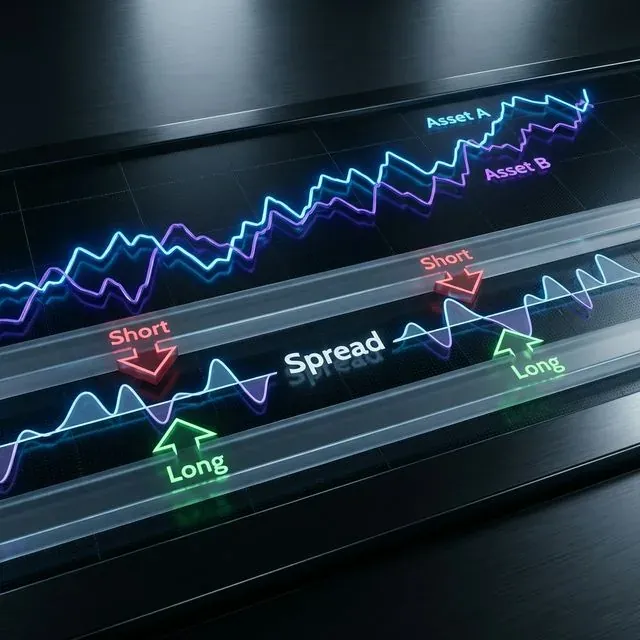 Visualizing the Distance Approach: Assets A and B tracking each other, with trading signals generated based on spread divergence (Long/Short)
डिस्टेंस एप्रोच की सैद्धांतिक बुनियाद
डिस्टेंस एप्रोच एसेट्स के बीच नॉर्मलाइज्ड प्राइस मूवमेंट्स के आधार पर पेयर्स ट्रेडिंग के लिए एक फ्रेमवर्क स्थापित करता है। इसके मूल में, यह मेथड उन एसेट्स की पहचान करने के लिए यूक्लिडियन स्क्वेर्ड डिस्टेंस मापों का उपयोग करता है जो ऐतिहासिक रूप से साथ-साथ चलते हैं, और जब उनका नॉर्मलाइज्ड प्राइस डाइवर्जेंस सांख्यिकीय रूप से महत्वपूर्ण थ्रेशोल्ड को पार कर जाता है तो ट्रेडिंग सिग्नल जनरेट करता है[2]।
इस एप्रोच में दो प्राइमरी स्टेज होते हैं:
- पेयर्स फॉर्मेशन - सांख्यिकीय रूप से संबंधित एसेट पेयर्स की पहचान करना
- ट्रेडिंग सिग्नल जनरेशन - डाइवर्जेंस के आधार पर एंट्री और एग्जिट रूल्स बनाना
गणितीय आधार
बेसिक इम्प्लीमेंटेशन नॉर्मलाइज्ड प्राइस सीरीज के बीच यूक्लिडियन डिस्टेंस का उपयोग करता है। नॉर्मलाइज्ड प्राइस टाइम सीरीज X और Y वाले दो एसेट्स के लिए, हम कैलकुलेट करते हैं:
fn euclidean_squared_distance(x: &[f64], y: &[f64]) -> f64 {
    assert_eq!(x.len(), y.len(), "Time series must have equal length");

    x.iter()
        .zip(y.iter())
        .map(|(xi, yi)| (xi - yi).powi(2))
        .sum()
}
यह डिस्टेंस मेट्रिक उन एसेट्स की पहचान करने में मदद करता है जो ऐतिहासिक रूप से साथ-साथ चलते हैं, जो स्टैटिस्टिकल आर्बिट्राज के अवसरों की बुनियाद प्रदान करता है[2]।
बेसिक डिस्टेंस एप्रोच इम्प्लीमेंटेशन
डेटा नॉर्मलाइजेशन
डिस्टेंस कैलकुलेट करने से पहले, तुलनीय स्केल स्थापित करने के लिए हमें प्राइस डेटा को नॉर्मलाइज करना होगा। आमतौर पर मिन-मैक्स नॉर्मलाइजेशन का उपयोग किया जाता है:
fn min_max_normalize(prices: &[f64]) -> Vec<f64> {
    if prices.is_empty() {
        return Vec::new();
    }

    let min_price = prices.iter().fold(f64::INFINITY, |a, &b| a.min(b));
    let max_price = prices.iter().fold(f64::NEG_INFINITY, |a, &b| a.max(b));
    let range = max_price - min_price;

    if range.abs() < f64::EPSILON {
        return vec![0.5; prices.len()];
    }

    prices.iter()
        .map(|&price| (price - min_price) / range)
        .collect()
}
निकटतम पेयर्स ढूंढना
हम सभी एसेट कॉम्बिनेशन के बीच यूक्लिडियन डिस्टेंस कैलकुलेट करके और सबसे कम डिस्टेंस वाले पेयर्स चुनकर संभावित पेयर्स की पहचान करते हैं:
#[derive(Debug, Clone)]
struct StockPair {
    stock1_idx: usize,
    stock2_idx: usize,
    distance: f64,
}

impl PartialEq for StockPair {
    fn eq(&self, other: &Self) -> bool {
        self.distance.eq(&other.distance)
    }
}

impl Eq for StockPair {}

impl PartialOrd for StockPair {
    fn partial_cmp(&self, other: &Self) -> Option<std::cmp::Ordering> {
        self.distance.partial_cmp(&other.distance)
    }
}

impl Ord for StockPair {
    fn cmp(&self, other: &Self) -> std::cmp::Ordering {
        self.partial_cmp(other).unwrap_or(std::cmp::Ordering::Equal)
    }
}

fn find_closest_pairs(normalized_prices: &[Vec<f64>], top_n: usize) -> Vec<StockPair> {
    let stock_count = normalized_prices.len();
    let mut pairs = BinaryHeap::new();

    for i in 0..stock_count {
        for j in (i+1)..stock_count {
            let distance = euclidean_squared_distance(&normalized_prices[i], &normalized_prices[j]);

            pairs.push(Reverse(StockPair {
                stock1_idx: i,
                stock2_idx: j,
                distance,
            }));

            // Keep only top N pairs
            if pairs.len() > top_n {
                pairs.pop();
            }
        }
    }

    // Convert from heap to vector and reverse to get ascending order
    pairs.into_iter().map(|Reverse(pair)| pair).collect()
}
हिस्टोरिकल वोलैटिलिटी कैलकुलेट करना
उपयुक्त ट्रेडिंग थ्रेशोल्ड सेट करने के लिए हिस्टोरिकल वोलैटिलिटी कैलकुलेशन बेहद जरूरी है:
fn calculate_spread_volatility(normalized_price1: &[f64], normalized_price2: &[f64]) -> f64 {
    assert_eq!(normalized_price1.len(), normalized_price2.len());

    // Calculate price spread
    let spread: Vec<f64> = normalized_price1.iter()
        .zip(normalized_price2.iter())
        .map(|(p1, p2)| p1 - p2)
        .collect();

    // Calculate mean of spread
    let mean = spread.iter().sum::<f64>() / spread.len() as f64;

    // Calculate standard deviation
    let variance = spread.iter()
        .map(|&x| (x - mean).powi(2))
        .sum::<f64>() / spread.len() as f64;

    variance.sqrt()
}
एडवांस्ड सिलेक्शन मेथड्स
इंडस्ट्री ग्रुप फिल्टरिंग
पेयर सिलेक्शन को एक ही इंडस्ट्री तक सीमित करने से आर्थिक रूप से संबंधित एसेट्स चुनकर परफॉर्मेंस बेहतर हो सकता है:
fn find_industry_pairs(
    normalized_prices: &[Vec<f64>],
    industry_codes: &[usize],
    top_n_per_industry: usize
) -> Vec<StockPair> {
    // Group stocks by industry
    let mut industry_groups: std::collections::HashMap<usize, Vec<usize>> = std::collections::HashMap::new();

    for (idx, &code) in industry_codes.iter().enumerate() {
        industry_groups.entry(code).or_default().push(idx);
    }

    // Find closest pairs within each industry
    let mut all_pairs = Vec::new();

    for (_industry_code, stock_indices) in industry_groups {
        let mut industry_pairs = Vec::new();

        for i in 0..stock_indices.len() {
            for j in (i+1)..stock_indices.len() {
                let stock1_idx = stock_indices[i];
                let stock2_idx = stock_indices[j];
                let distance = euclidean_squared_distance(
                    &normalized_prices[stock1_idx],
                    &normalized_prices[stock2_idx]
                );

                industry_pairs.push(StockPair {
                    stock1_idx,
                    stock2_idx,
                    distance,
                });
            }
        }

        // Sort pairs by distance
        industry_pairs.sort_by(|a, b| a.distance.partial_cmp(&b.distance).unwrap());

        // Take top N from each industry
        let top_pairs: Vec<StockPair> = industry_pairs.into_iter()
            .take(top_n_per_industry)
            .collect();

        all_pairs.extend(top_pairs);
    }

    all_pairs
}
जीरो-क्रॉसिंग्स एप्रोच उन पेयर्स की पहचान करता है जिनमें बार-बार कन्वर्जेंस और डाइवर्जेंस होता है, जो संभावित रूप से अधिक लाभदायक ट्रेडिंग अवसरों का संकेत दे सकता है:
 Zero-Crossings concept: identifying pairs that frequently mean-revert, indicated by the spread crossing the zero line
fn count_zero_crossings(spread: &[f64]) -> usize {
    if spread.len() < 2 {
        return 0;
    }

    let mut count = 0;
    for i in 1..spread.len() {
        if (spread[i-1] < 0.0 && spread[i] >= 0.0) ||
           (spread[i-1] >= 0.0 && spread[i] < 0.0) {
            count += 1;
        }
    }

    count
}

fn find_zero_crossing_pairs(
    normalized_prices: &[Vec<f64>],
    top_distance_threshold: f64,
    min_crossings: usize
) -> Vec<StockPair> {
    let stock_count = normalized_prices.len();
    let mut qualifying_pairs = Vec::new();

    for i in 0..stock_count {
        for j in (i+1)..stock_count {
            let distance = euclidean_squared_distance(&normalized_prices[i], &normalized_prices[j]);

            // Only consider pairs with distance below threshold
            if distance < top_distance_threshold {
                // Calculate spread
                let spread: Vec<f64> = normalized_prices[i].iter()
                    .zip(normalized_prices[j].iter())
                    .map(|(p1, p2)| p1 - p2)
                    .collect();

                let crossings = count_zero_crossings(&spread);

                if crossings >= min_crossings {
                    qualifying_pairs.push(StockPair {
                        stock1_idx: i,
                        stock2_idx: j,
                        distance,
                    });
                }
            }
        }
    }

    // Sort by number of crossings (could extend StockPair to include this)
    qualifying_pairs.sort_by(|a, b| a.distance.partial_cmp(&b.distance).unwrap());
    qualifying_pairs
}
हिस्टोरिकल स्टैंडर्ड डेविएशन का ध्यान रखना
यह मेथड ज्यादा स्प्रेड वोलैटिलिटी वाले पेयर्स को प्राथमिकता देकर बेसिक एप्रोच की एक सीमा को दूर करता है, जिससे प्रॉफिट पोटेंशियल बढ़ सकता है:
fn find_highsd_pairs(
    normalized_prices: &[Vec<f64>],
    top_distance_count: usize,
    min_volatility: f64
) -> Vec<StockPair> {
    let stock_count = normalized_prices.len();
    let mut all_pairs = Vec::new();

    for i in 0..stock_count {
        for j in (i+1)..stock_count {
            let distance = euclidean_squared_distance(&normalized_prices[i], &normalized_prices[j]);

            // Calculate spread volatility
            let spread: Vec<f64> = normalized_prices[i].iter()
                .zip(normalized_prices[j].iter())
                .map(|(p1, p2)| p1 - p2)
                .collect();

            let volatility = calculate_spread_volatility(&normalized_prices[i], &normalized_prices[j]);

            if volatility >= min_volatility {
                all_pairs.push(StockPair {
                    stock1_idx: i,
                    stock2_idx: j,
                    distance,
                });
            }
        }
    }

    // Sort by distance
    all_pairs.sort_by(|a, b| a.distance.partial_cmp(&b.distance).unwrap());

    // Take top N pairs with highest volatility that meet distance criteria
    all_pairs.into_iter().take(top_distance_count).collect()
}
एडवांस्ड एप्रोच: पियर्सन करेलेशन मेथड
पियर्सन करेलेशन एप्रोच बेसिक डिस्टेंस एप्रोच की तुलना में कई फायदे देता है, क्योंकि यह प्राइस डिस्टेंस के बजाय रिटर्न करेलेशन पर फोकस करता है[1]।
Rust में इम्प्लीमेंटेशन
fn pearson_correlation(x: &[f64], y: &[f64]) -> f64 {
    assert_eq!(x.len(), y.len(), "Arrays must have the same length");

    let n = x.len() as f64;
    let sum_x: f64 = x.iter().sum();
    let sum_y: f64 = y.iter().sum();
    let sum_xx: f64 = x.iter().map(|&val| val * val).sum();
    let sum_yy: f64 = y.iter().map(|&val| val * val).sum();
    let sum_xy: f64 = x.iter().zip(y.iter()).map(|(&xi, &yi)| xi * yi).sum();

    let numerator = n * sum_xy - sum_x * sum_y;
    let denominator = ((n * sum_xx - sum_x * sum_x) * (n * sum_yy - sum_y * sum_y)).sqrt();

    if denominator.abs() < f64::EPSILON {
        return 0.0;
    }

    numerator / denominator
}

struct PearsonPair {
    stock_idx: usize,
    comover_indices: Vec<usize>,
    correlations: Vec<f64>,
}

fn find_pearson_pairs(returns: &[Vec<f64>], top_n_comovers: usize) -> Vec<PearsonPair> {
    let stock_count = returns.len();
    let mut all_pairs = Vec::new();

    for i in 0..stock_count {
        let mut correlations = Vec::with_capacity(stock_count - 1);

        for j in 0..stock_count {
            if i == j {
                continue;
            }

            let correlation = pearson_correlation(&returns[i], &returns[j]).abs();
            correlations.push((j, correlation));
        }

        // Sort by correlation (highest first)
        correlations.sort_by(|a, b| b.1.partial_cmp(&a.1).unwrap_or(std::cmp::Ordering::Equal));

        // Take top N comovers
        let top_comovers: Vec<(usize, f64)> = correlations.into_iter()
            .take(top_n_comovers)
            .collect();

        let (comover_indices, correlation_values): (Vec<usize>, Vec<f64>) =
            top_comovers.into_iter().unzip();

        all_pairs.push(PearsonPair {
            stock_idx: i,
            comover_indices,
            correlations: correlation_values,
        });
    }

    all_pairs
}
पोर्टफोलियो फॉर्मेशन और बीटा कैलकुलेशन
पियर्सन एप्रोच हर स्टॉक के लिए कोमूवर्स के पोर्टफोलियो बनाता है, फिर रिग्रेशन कोएफिशिएंट्स कैलकुलेट करता है:
fn calculate_beta(stock_returns: &[f64], portfolio_returns: &[f64]) -> f64 {
    let cov_xy = covariance(stock_returns, portfolio_returns);
    let var_x = variance(portfolio_returns);

    if var_x.abs() < f64::EPSILON {
        return 0.0;
    }

    cov_xy / var_x
}

fn covariance(x: &[f64], y: &[f64]) -> f64 {
    assert_eq!(x.len(), y.len());

    let n = x.len() as f64;
    let mean_x: f64 = x.iter().sum::<f64>() / n;
    let mean_y: f64 = y.iter().sum::<f64>() / n;

    let sum_cov: f64 = x.iter()
        .zip(y.iter())
        .map(|(&xi, &yi)| (xi - mean_x) * (yi - mean_y))
        .sum();

    sum_cov / n
}

fn variance(x: &[f64]) -> f64 {
    let n = x.len() as f64;
    let mean: f64 = x.iter().sum::<f64>() / n;

    let sum_var: f64 = x.iter()
        .map(|&xi| (xi - mean).powi(2))
        .sum();

    sum_var / n
}
ट्रेडिंग सिग्नल जनरेशन
दोनों एप्रोच में अंतिम स्टेप डाइवर्जेंस थ्रेशोल्ड के आधार पर ट्रेडिंग सिग्नल जनरेट करना है:
enum TradingSignal {
    Long,
    Short,
    Neutral
}

struct TradePosition {
    stock1_idx: usize,
    stock2_idx: usize,
    signal: TradingSignal,
    entry_spread: f64,
    timestamp: usize,
}

fn generate_trading_signals(
    normalized_prices: &[Vec<f64>],
    pairs: &[StockPair],
    threshold_multiplier: f64,
    volatilities: &[f64],
    current_time: usize
) -> Vec<TradePosition> {
    let mut positions = Vec::new();

    for (pair_idx, pair) in pairs.iter().enumerate() {
        let stock1_idx = pair.stock1_idx;
        let stock2_idx = pair.stock2_idx;

        // Calculate current spread
        let current_spread = normalized_prices[stock1_idx][current_time] -
                             normalized_prices[stock2_idx][current_time];

        let threshold = threshold_multiplier * volatilities[pair_idx];

        let signal = if current_spread > threshold {
            // Stock1 is overvalued relative to Stock2
            TradingSignal::Short
        } else if current_spread < -threshold {
            // Stock1 is undervalued relative to Stock2
            TradingSignal::Long
        } else {
            TradingSignal::Neutral
        };

        if signal != TradingSignal::Neutral {
            positions.push(TradePosition {
                stock1_idx,
                stock2_idx,
                signal,
                entry_spread: current_spread,
                timestamp: current_time,
            });
        }
    }

    positions
}
परफॉर्मेंस ऑप्टिमाइजेशन
हाई-फ्रीक्वेंसी ट्रेडिंग सिस्टम्स के लिए परफॉर्मेंस बहुत महत्वपूर्ण है। SIMD (Single Instruction, Multiple Data) इंस्ट्रक्शंस डिस्टेंस कैलकुलेशन को काफी तेज कर सकते हैं:
 SIMD acceleration: utilizing data-level parallelism in Rust to process multiple price points simultaneously, drastically reducing latency
#[cfg(target_arch = "x86_64")]
use std::arch::x86_64::*;

#[cfg(target_arch = "x86_64")]
#[inline]
unsafe fn euclidean_distance_simd(x: &[f32], y: &[f32]) -> f32 {
    assert_eq!(x.len(), y.len());

    let mut sum = _mm256_setzero_ps();
    let chunks = x.len() / 8;

    for i in 0..chunks {
        let xi = _mm256_loadu_ps(&x[i * 8]);
        let yi = _mm256_loadu_ps(&y[i * 8]);

        let diff = _mm256_sub_ps(xi, yi);
        let squared = _mm256_mul_ps(diff, diff);
        sum = _mm256_add_ps(sum, squared);
    }

    // Handle the remaining elements
    let mut result = _mm256_reduce_add_ps(sum);

    for i in (chunks * 8)..x.len() {
        result += (x[i] - y[i]).powi(2);
    }

    result.sqrt()
}

// Helper function to sum SIMD vector
#[cfg(target_arch = "x86_64")]
#[inline(always)]
unsafe fn _mm256_reduce_add_ps(v: __m256) -> f32 {
    let hilow = _mm256_extractf128_ps(v, 1);
    let low = _mm256_castps256_ps128(v);
    let sum128 = _mm_add_ps(hilow, low);

    let hi64 = _mm_extractf128_si128(_mm_castps_si128(sum128), 1);
    let low64 = _mm_castps_si128(sum128);
    let sum64 = _mm_add_ps(_mm_castsi128_ps(hi64), _mm_castsi128_ps(low64));

    _mm_cvtss_f32(_mm_hadd_ps(sum64, sum64))
}
असिंक्रोनस प्रोसेसिंग थ्रूपुट को और बेहतर कर सकती है, खासकर तब जब कई स्टॉक पेयर्स के साथ काम किया जा रहा हो:
use tokio::task;
use futures::future::join_all;

async fn process_pairs_async(
    normalized_prices: &[Vec<f64>],
    stock_count: usize,
    chunk_size: usize
) -> Vec<StockPair> {
    let mut tasks = Vec::new();

    // Split work into chunks
    let chunks = (stock_count + chunk_size - 1) / chunk_size;

    for chunk in 0..chunks {
        let start = chunk * chunk_size;
        let end = std::cmp::min((chunk + 1) * chunk_size, stock_count);

        let prices_clone = normalized_prices.to_vec();

        let task = task::spawn(async move {
            let mut pairs = Vec::new();

            for i in start..end {
                for j in (i+1)..stock_count {
                    let distance = euclidean_squared_distance(&prices_clone[i], &prices_clone[j]);

                    pairs.push(StockPair {
                        stock1_idx: i,
                        stock2_idx: j,
                        distance,
                    });
                }
            }

            pairs
        });

        tasks.push(task);
    }

    // Await all tasks and combine results
    let results = join_all(tasks).await;

    let mut all_pairs = Vec::new();
    for result in results {
        if let Ok(pairs) = result {
            all_pairs.extend(pairs);
        }
    }

    // Sort by distance
    all_pairs.sort_by(|a, b| a.distance.partial_cmp(&b.distance).unwrap_or(std::cmp::Ordering::Equal));
    all_pairs
}
स्ट्रैटेजी इम्प्लीमेंटेशन का टेस्टिंग
अपने इम्प्लीमेंटेशन का मूल्यांकन करने के लिए, हमें उपयुक्त टेस्टिंग इंफ्रास्ट्रक्चर चाहिए:
#[cfg(test)]
mod tests {
    use super::*;

    #[test]
    fn test_normalization() {
        let prices = vec![10.0, 15.0, 12.0, 18.0, 20.0];
        let normalized = min_max_normalize(&prices);

        let expected = vec![0.0, 0.5, 0.2, 0.8, 1.0];

        for (a, b) in normalized.iter().zip(expected.iter()) {
            assert!((a - b).abs() < 0.001);
        }
    }

    #[test]
    fn test_euclidean_distance() {
        let x = vec![0.1, 0.2, 0.3, 0.4, 0.5];
        let y = vec![0.15, 0.22, 0.35, 0.38, 0.53];

        let distance = euclidean_squared_distance(&x, &y);
        let expected = 0.0049; // Calculated manually

        assert!((distance - expected).abs() < 0.0001);
    }

    #[test]
    fn test_pearson_correlation() {
        let x = vec![1.0, 2.0, 3.0, 4.0, 5.0];
        let y = vec![5.0, 4.0, 3.0, 2.0, 1.0];

        let corr = pearson_correlation(&x, &y);
        let expected = -1.0; // Perfect negative correlation

        assert!((corr - expected).abs() < 0.0001);
    }

    // Integration tests would be implemented in tests/ directory
}
इंटीग्रेशन टेस्टिंग के लिए, हम प्रोजेक्ट रूट में अलग tests डायरेक्टरी में टेस्ट रखने के Rust कन्वेंशन का पालन करेंगे[15][18]।
निष्कर्ष
डिस्टेंस एप्रोच पेयर्स ट्रेडिंग के लिए एक रोबस्ट फ्रेमवर्क प्रदान करता है, जिसमें बेसिक और एडवांस्ड दोनों मेथडोलॉजी मूल्यवान स्टैटिस्टिकल आर्बिट्राज अवसर देती हैं। बेसिक एप्रोच, यूक्लिडियन डिस्टेंस पर अपने फोकस के साथ, सरलता और प्रभावशीलता प्रदान करता है, जबकि पियर्सन करेलेशन एप्रोच अतिरिक्त फ्लेक्सिबिलिटी और संभावित रूप से बेहतर डाइवर्जेंस रिवर्जन विशेषताएं प्रदान करता है।
Rust की परफॉर्मेंस विशेषताएं इसे इन कंप्यूटेशनली इंटेंसिव स्ट्रैटेजीज को इम्प्लीमेंट करने के लिए एक आदर्श भाषा बनाती हैं, खासकर SIMD और कंकरेंट प्रोसेसिंग जैसे ऑप्टिमाइजेशन के साथ। स्टैटिस्टिकल रिगर और कुशल इम्प्लीमेंटेशन का यह संयोजन एल्गोरिदमिक ट्रेडर्स के लिए एक शक्तिशाली टूलकिट बनाता है।
पेयर्स ट्रेडिंग सिस्टम इम्प्लीमेंट करते समय, कई बातों का ध्यान रखना चाहिए:
- सरलता (बेसिक एप्रोच) और बेहतर स्टैटिस्टिकल पावर (पियर्सन एप्रोच) के बीच ट्रेड-ऑफ
- बड़े पैमाने पर पेयर एनालिसिस के लिए आवश्यक कंप्यूटेशनल संसाधन
- ट्रांजैक्शन कॉस्ट, जो प्रॉफिटेबिलिटी को काफी प्रभावित कर सकती है[3]
- पेयर्स की निरंतर निगरानी और रीकैलिब्रेशन की जरूरत
डिस्टेंस एप्रोच को Rust की परफॉर्मेंस क्षमताओं के साथ जोड़कर, ट्रेडर्स आधुनिक बाजारों के लिए आवश्यक गति और स्केल पर काम करने में सक्षम अत्यधिक कुशल और प्रभावी स्टैटिस्टिकल आर्बिट्राज सिस्टम विकसित कर सकते हैं।
Citation
@software{soloviov2025distanceapproach,
  author = {Soloviov, Eugen},
  title = {Distance Approach in Pairs Trading: Implementation and Analysis with Rust},
  year = {2025},
  url = {https://marketmaker.cc/en/blog/post/distance-approach-pairs-trading},
  version = {0.1.0},
  description = {A comprehensive analysis of basic and advanced Distance Approach methodologies for pairs trading, with practical implementations in Rust tailored for high-frequency traders and algorithmic developers.}
}
References
- Hudson Thames - Introduction to Distance Approach in Pairs Trading Part II
- Hudson Thames - Distance Approach in Pairs Trading Part I
- Reddit - Pairs Trading is Too Good to Be True?
- GitHub - Kucoin Arbitrage
- docs.rs - Euclidean Distance in geo crate
- Simple Linear Regression in Rust
- GitHub - correlation_rust
- docs.rs - Cointegration in algolotl-ta
- GitHub - trading_engine_rust
- docs.rs - distances crate
- Reddit - Looking for stats crate for Dickey-Fuller
- crates.io - crypto-pair-trader
- w3resource - Rust Structs and Enums Exercise
- Rust Book - Test Organization
- Design Patterns in Rust
- GitHub - simd-euclidean
- Rust by Example - Integration Testing
- YouTube - Integration Testing in Rust
- Stack Overflow - Calculate Total Distance Between Multiple Points
- Databento - Pairs Trading Example
- Rust std - f64 Primitive
- Hudson & Thames - Distance Approach Documentation
- GitHub - trading-algorithms-rust
- docs.rs - linreg crate
- Rust Book - References and Borrowing
- Stack Overflow - How to Interpret adfuller Test Results
- lib.rs - arima crate
- Econometrics with R - Cointegration
- DolphinDB - adfuller Function
- docs.rs - arima crate (latest)
- Wikipedia - Cointegration
Authors

Trading-systems engineer
Trading-systems engineer building bots since 2017: cross-exchange arbitrage (connected up to 30 venues), cointegration-based pairs arbitrage across spot and futures, scalping, news and sentiment-driven strategies, trend algorithms, and portfolio management and balancing algorithms. Also builds sub-millisecond order execution, big-data warehouses, backtesting engines, AI agents, and trading interfaces (incl. open-source profitmaker.cc). Stack: JS/TS, Python, Rust/Zig/Go, DevOps, backend, frontend, architecture.