Aeron: Inside the Messaging System That Powers Half of the HFT Industry

Aeron: Media Driver, shared memory, triple-buffered logs — the architecture that set the standard for low-latency messaging.
When it comes to messaging systems for high-frequency trading, one name comes up in every conversation — Aeron. Developed by Martin Thompson and the Real Logic team (later Adaptive Financial Consulting), Aeron became the de facto standard for data transmission in a world where microseconds decide everything.
In this article, we break Aeron down into its parts: Transport, Archive, Cluster, and Sequencer. We explain how it works inside, where its strengths lie — and where the problems begin.
TL;DR
- Aeron — open-source (Apache 2.0) messaging system for low-latency applications
- IPC latency: ~250 ns round-trip via shared memory
- Throughput: 20+ million messages per second
- Four products: Transport (core), Archive (record/replay), Cluster (Raft), Sequencer (total order)
- Language: Java (primary) + C client (less complete)
- Used by: dozens of HFT firms, market makers, and exchanges
Part 1: Aeron Transport — The Core
Architecture: Media Driver

The central component is the Media Driver — a separate process (or embedded library) that manages all data transmission. Applications communicate with it via shared memory (mmap files in /dev/shm).
Key data structures:
- ManyToOneRingBuffer (MPSC) — commands from clients to Media Driver
- BroadcastTransmitter/Receiver — responses from Media Driver to clients
- Log Buffers — triple-buffered append-only log for data
- Position Counters — atomic counters for position coordination
Performance
| Metric | Value |
|---|---|
| IPC (shared memory) RTT | ~250 ns |
| UDP unicast RTT (bare metal) | ~10 us |
| UDP unicast RTT (cloud, AWS) | <100 us |
| Throughput | >20M msg/sec |
| Aeron Premium (kernel bypass) P99 | 39 us |
Part 2: Aeron Archive — Record and Replay
Archive records message streams to disk for replay from any position. Use cases: regulatory audit, crash recovery, backtesting, debugging.
Part 3: Aeron Cluster — Raft Consensus

Fault-tolerant replicated state machine for systems where losing a message is unacceptable (matching engines, order management). Leader election, log replication, strongly consistent reads.
Part 4: Aeron Sequencer — Total Ordering
New product (2025) optimized for capital markets. Provides a single global ordering of all events — critical for matching engines and multi-venue market making. Built on Cluster. Commercial product (closed-source).
Weaknesses
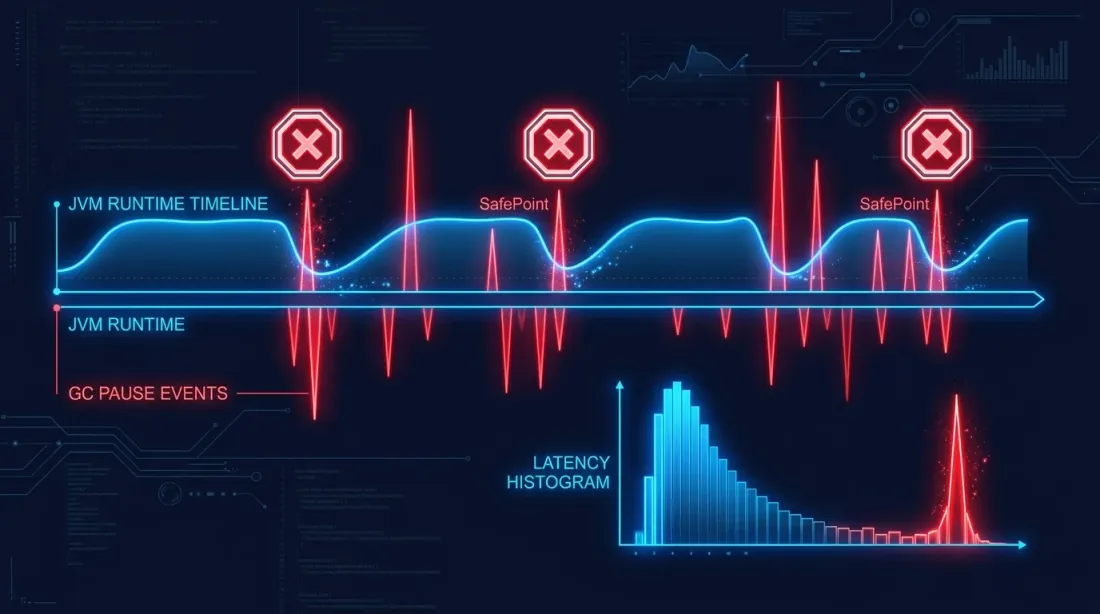
- JVM dependency — safepoints, GC pauses, JIT warm-up
- Media Driver overhead — extra hop through shared memory
- No native kernel bypass — UDP only (io_uring, DPDK not supported in open-source)
- SBE is separate — XML schemas, Java code generator, separate build step
- No zero-copy networking — data copied from socket to log buffer
Alternatives
| Project | Language | Strengths | Weaknesses |
|---|---|---|---|
| Aeron | Java/C | Mature, battle-tested, full ecosystem | JVM overhead, no kernel bypass (open-source) |
| ZigBolt | Zig | 20 ns SPSC, zero-copy codecs, no GC | Young project (v0.2.1) |
| Chronicle Queue | Java | Persistent, billions of msg/day | JVM GC, heavyweight |
| ZeroMQ | C | Simple API, many transports | No reliability layer, no clustering |
We at Marketmaker.cc developed ZigBolt — an open-source Aeron alternative in Zig. No JVM, no GC, comptime codecs, 20 ns SPSC latency. Read more in our ZigBolt article.
Links:
- Aeron GitHub: github.com/real-logic/aeron
- Martin Thompson: mechanical-sympathy.blogspot.com
- ZigBolt (our alternative): article | site
- Marketmaker.cc: marketmaker.cc
Citation
@article{soloviov2026aeron,
  author = {Soloviov, Eugen},
  title = {Aeron: Inside the Messaging System That Powers Half of the HFT Industry},
  year = {2026},
  url = {https://marketmaker.cc/en/blog/post/aeron-messaging-overview},
  description = {Architecture deep-dive: Aeron Transport, Archive, Cluster, Sequencer.}
}
MarketMaker.cc Team
Miqdoriy tadqiqotlar va strategiya
Read More

ZigBolt: Why We Built Our Own Aeron in Zig and Hit 20 Nanoseconds Per Message

Complex Arbitrage Execution in Rust: From Nanoseconds to Atomic Multi-Legs